
Biophilic Design: Bringing Nature's Healing Power Into Interior Spaces
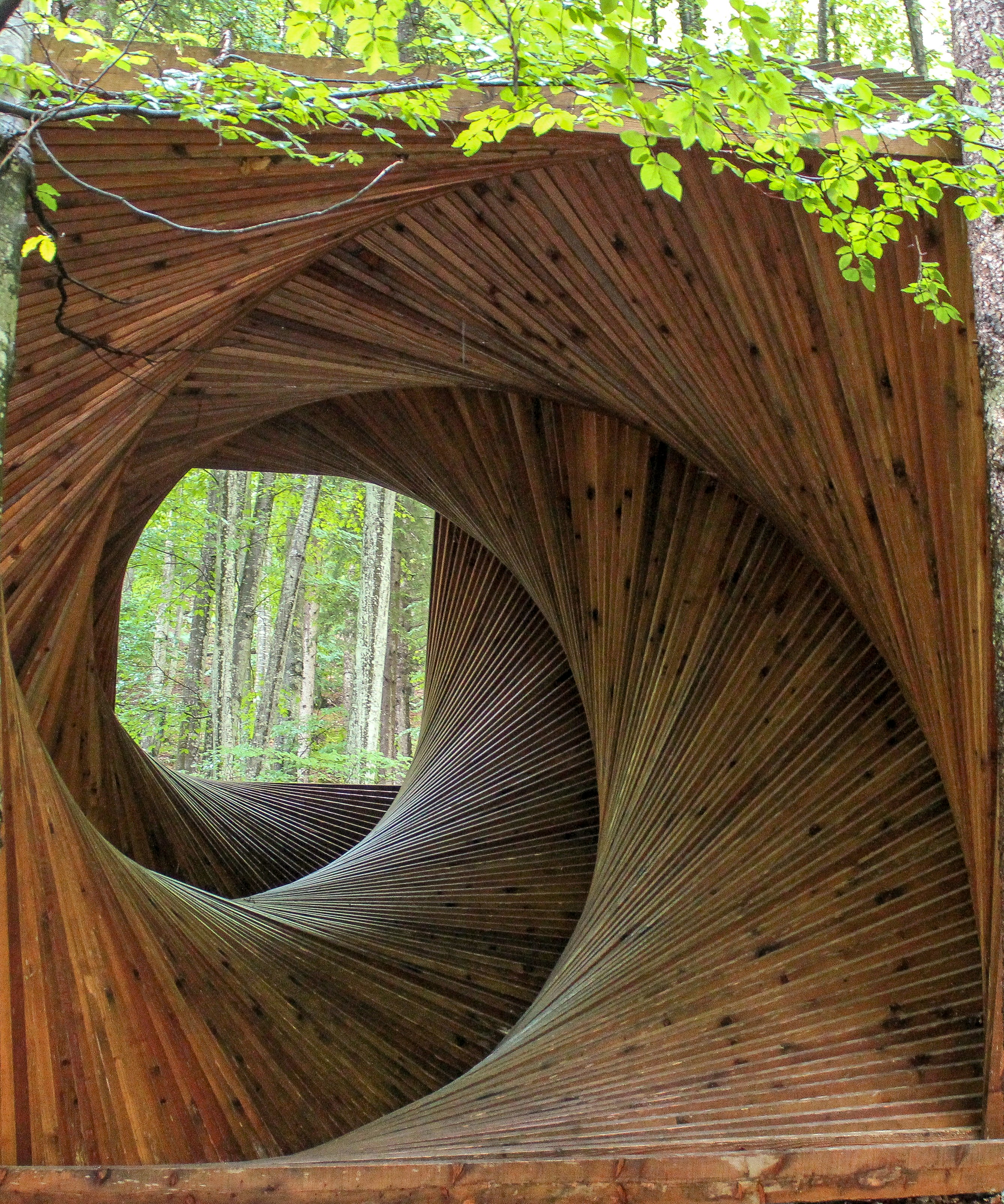
Biophilic design is the deliberate incorporation of nature and nature-inspired elements into interior spaces to support human health and well-being.
The term comes from “biophilia”, which describes our innate, genetically determined affinity for the natural world. For 99.99% of human history, roughly 3.6 billion years, we lived in natural environments surrounded by organic patterns, natural light, and the rhythms of the outdoors.
Today, we spend over 90% of our time indoors, disconnected from the environments our bodies are hardwired to need. Biophilic interior design bridges this gap through two approaches: natural biophilia (living plants, natural materials, water features, and daylight) and biomimicry (nature-inspired patterns, botanical prints, fractal designs, and organic forms). Both work because they tap into something evolutionary: the fact that our bodies haven’t forgotten what our modern lives have left behind.
Download our free Biophilic Design Implementation Guide and discover research-backed strategies you can apply immediately to reduce stress, improve well-being, and create environments that truly heal.
Biophilic Design: The Science & Research Foundation
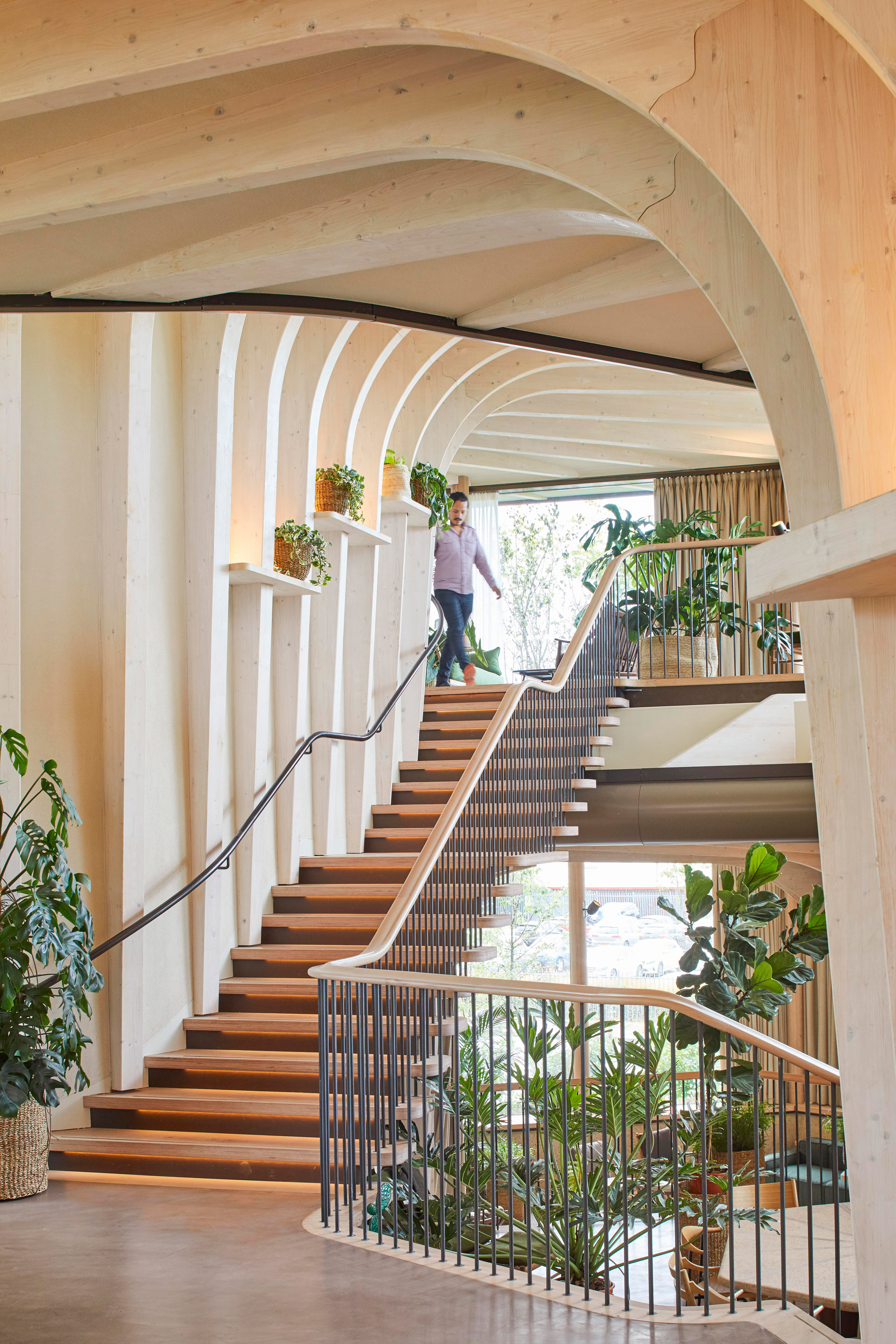
The health benefits of biophilic interior design are proven: lowered physiological stress markers and psychological anxiety, faster surgical recovery, and universally positive mood scores. Hospitals like Singapore’s Khoo Teck Puat have made biophilic design their global standard. Groundbreaking fractal research from universities like Oregon and Yale continues to reveal the positive impact nature-inspired patterns have on our brains.
Medical facilities worldwide are using nature-inspired design to heal their patients. The question for architects and interior designers is simple: if the healthcare industry relies on biophilic design to improve patient outcomes, shouldn’t we be using it for our clients? Patients?
Proven Health Benefits
The research is clear: biophilic design creates measurable, positive physiological and psychological changes in the human body.
Physical Benefits of Biophilic Interior Design:
- Faster post-surgical recovery times
- Lower blood pressure and heart rate
- Reduced cortisol (stress hormone) levels
- Improved immune function
- Better sleep quality
Mental & Cognitive Benefits of Biophilic Interior Design:
- Physiological and psychological reduction in stress and anxiety
- Improved cognitive function and problem-solving
- Enhanced mood and emotional well-being
- Better concentration and mental clarity
These aren’t subjective improvements, they’re documented, measurable outcomes that science can track and verify.
These are the real-life health impacts your design has on your client’s lives.
Biophilic Design in Action:
Real-World Healthcare Examples
Images of Khoo Teck Puat Hospital and Maggies Centres.
When the medical industry, where outcomes are literally life and death, adopts a design philosophy, it’s worth paying attention.
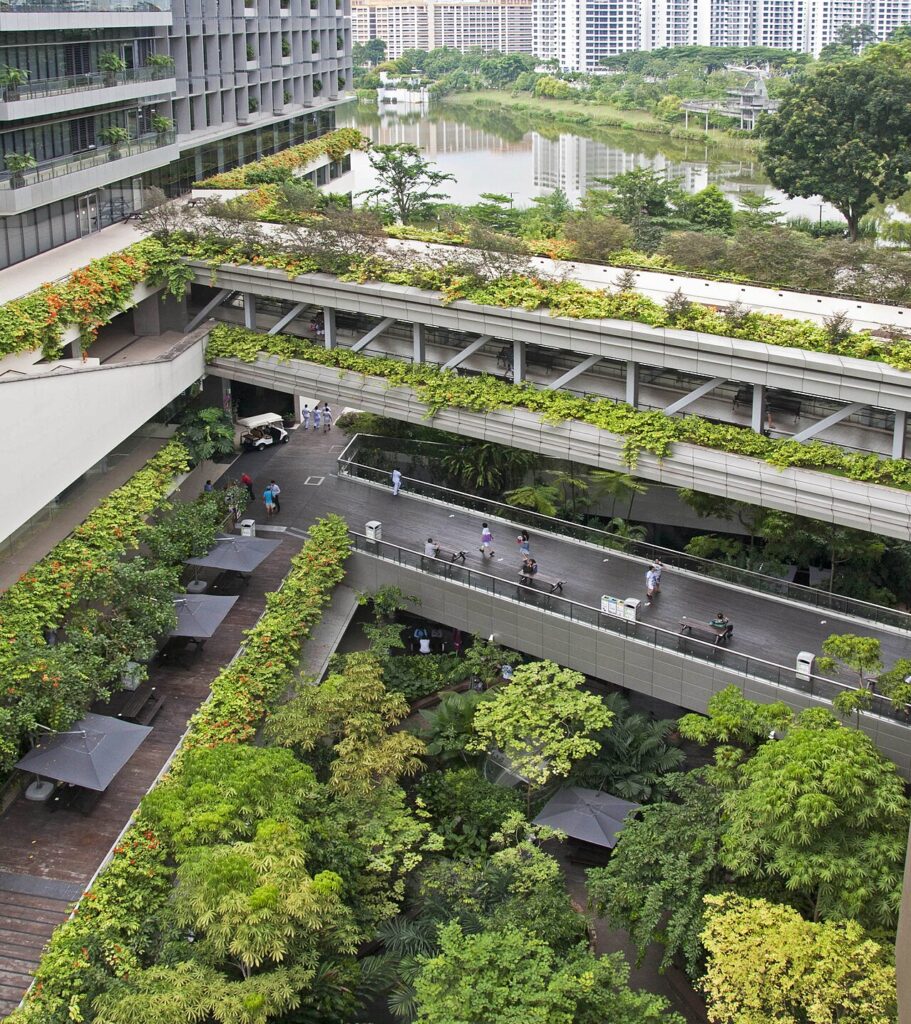
Khoo Teck Puat Hospital in Singapore is where healthcare designers from around the world make pilgrimages to see biophilic design in full effect. Winner of the Stephen R. Kellert Biophilic Design Award, this hospital is designed with 100% biophilic principles and stands as the global gold standard for nature-integrated healthcare.
The facility features hundreds of species of plant life, water features, natural ventilation, fractal patterns, and sight lines to greenery from nearly every space. The results are measurable: improved patient outcomes, faster recovery times, and reduced stress for both patients and staff.
Maggie’s Centres, specialized cancer care facilities across the UK, are designed entirely around biophilic principles featuring abundant natural light, fractal patterning in materials and finishes, natural color palettes, and generous access to gardens and greenery. The design isn’t purely decorative; it’s therapeutic. Patients report improved emotional well-being, reduced anxiety, and a greater sense of calm and hope. The architecture itself becomes part of the healing process.
More Evidence In Favor of Biophilic Design: From Forests to Hospitals
Shinrin-Yoku (Forest Bathing): Japanese research on “forest bathing”, or simply spending time in nature, shows measurable reductions in cortisol, blood pressure, and heart rate, along with improved immune markers. Biophilic interior design brings these same benefits indoors.
Roger Ulrich’s 1984 Study: Research published in Science journal found that surgical patients in hospital rooms with views of trees required significantly less pain medication and had shorter hospital stays than those with views of brick walls.
The pattern is undeniable: nature heals, and in today’s world where we spend the vast majority of our time indoors, design is the delivery system.

shouldn’t we be using it for our clients?
Academic Authority:
The Researchers Leading the Field
Biophilic design isn’t trend-driven, it’s research-backed, with decades of study from leading institutions and experts. At Science in Design, we’re fortunate to have many leaders of the biophilic design movement as a part of our faculty, educating designers on the science behind design choices that contribute to health and wellbeing.
E.O. Wilson (Harvard University): Biologist and author who introduced the biophilia hypothesis in 1984, proposing that humans have an innate tendency to seek connections with nature.
Stephen Kellert (Yale University): Pioneer in biophilic design research, co-author of The Practice of Biophilic Design, and one of the first academics to translate biophilia theory into design frameworks.
Terrapin Bright Green: The definitive authority on biophilic design implementation. Their 14 Patterns of Biophilic Design framework is the industry standard for translating research into practice. Two members of Terrapin Bright Green, Catie Ryan Balagtas and Bill Browning, are part of the Science in Design faculty.
Dr. Richard Taylor (University of Oregon): A member of the Science and Design faculty, Dr. Richard Taylor is the leading researcher in fractal patterns and their impact on stress reduction, cognition, and visual comfort. His work reveals why nature’s repeating patterns calm our brains.
Dr. Anastasija & Martin Lesjak (13&9 Design): Interdisciplinary team combining medical expertise with architectural practice, focusing on how biophilic and fractal elements can be integrated into everyday built environments. Learn more from this team and Dr. Richard Taylor in our webinar, Nature’s Design Blueprint for Well-Being.
Science In Design Certified designers gain knowledge from a faculty of interdisciplinary experts who share cutting-edge research on the impact of design on human health and well-being. Ready to join the movement?
Terrapin Bright Green’s 14 Patterns of Biophilic Design
Terrapin Bright Green’s framework becomes invaluable for designers who want to implement biophilic design principles into their practice. Their research has identified 14 specific patterns that consistently trigger positive biological responses in humans, including stress reduction, improved cognition, and enhanced well-being. They can be applied to residential and commercial spaces in varying configurations to achieve the health benefits your client desires.
These patterns are organized into three categories based on how they connect us to nature: direct physical presence, organic representations, and spatial configurations that echo our evolutionary past.
Physical Presence of Biophilic Design:
Nature in the Space
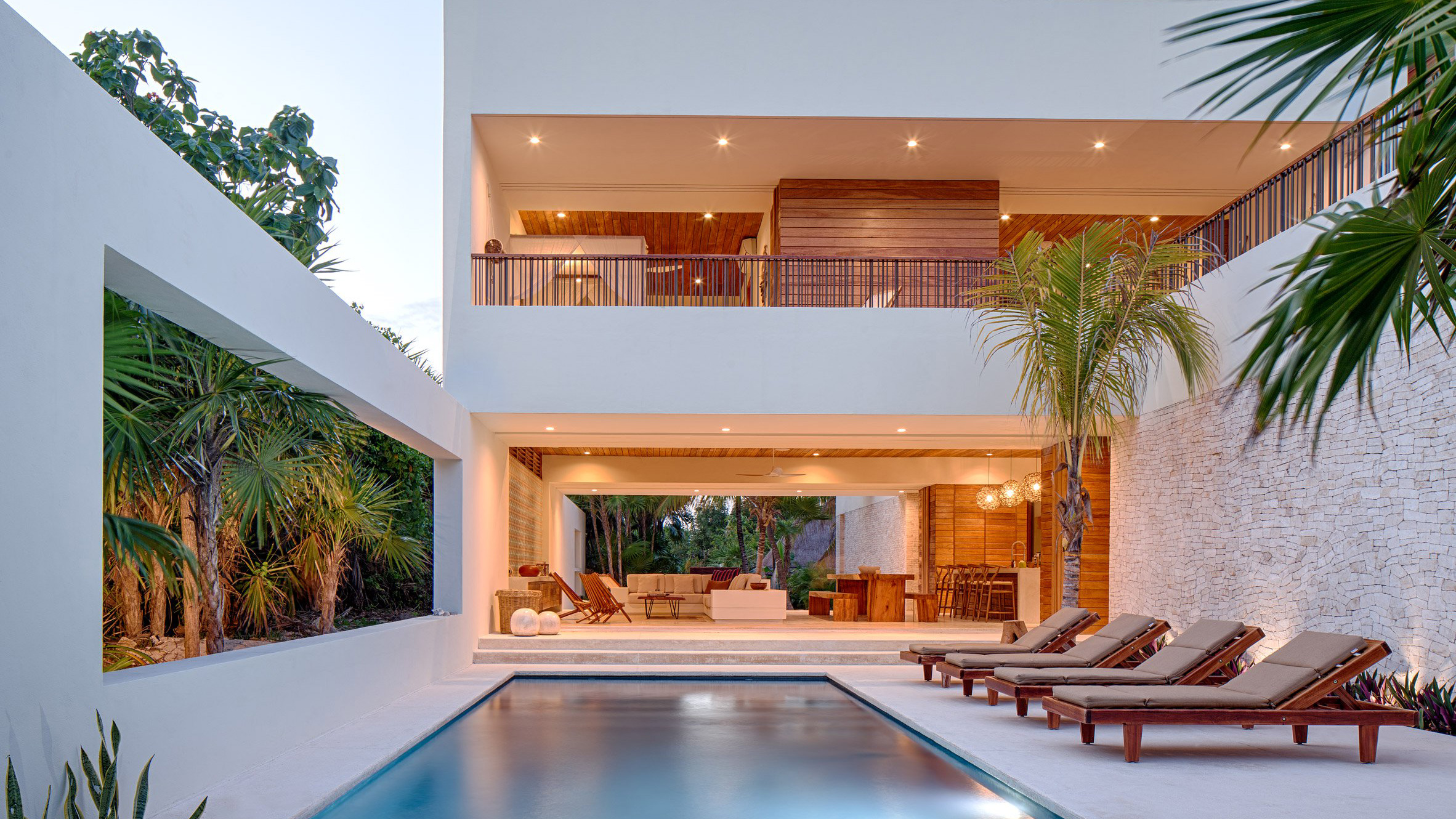
These principles include the direct physical presence of nature.
- Visual Connection with Nature
A visual connection with nature is created when occupants can see living systems, natural processes, or landscapes from within a space. This may include views to gardens, interior plantings, aquariums, or even thoughtfully selected nature artwork that evokes organic forms and life beyond the built environment. - Non-Visual Connection with Nature
A non-visual connection with nature engages the senses beyond sight, incorporating auditory, tactile, olfactory, or even gustatory experiences that recall the natural world. Elements such as birdsong, flowing water, natural scents, and richly textured materials like wood or stone deepen this sensory relationship. - Non-Rhythmic Sensory Stimuli
Non-rhythmic sensory stimuli refer to subtle, unpredictable natural movements that can be anticipated but never fully controlled. The rustling of leaves, shifting shadows, or birds passing by a window create fleeting moments of engagement that gently draw attention and support cognitive restoration. - Thermal & Airflow Variability
Thermal and airflow variability introduce subtle fluctuations in temperature, humidity, and air movement that mirror natural outdoor conditions. Features such as operable windows, ceiling fans, and natural ventilation systems help recreate these dynamic environmental shifts within interior spaces. - Presence of Water
The presence of water can be experienced visually, audibly, or through touch, offering a powerful sensory connection to nature. Fountains, ponds, aquariums, rain gardens, or water walls introduce movement, reflection, and sound that enhance calm and psychological well-being. - Dynamic & Diffuse Light
Dynamic and diffuse light harnesses the changing qualities of natural illumination throughout the day. By incorporating daylight, dappled light filtered through foliage, or softly flickering firelight, spaces gain depth, rhythm, and a sense of temporal awareness. - Connection with Natural Systems
A connection with natural systems fosters awareness of seasonal and temporal changes in the environment. Window views that reveal shifting weather patterns, blooming plants, or visiting birds allow occupants to remain attuned to the cycles and processes of the natural world.
Organic Representations of Biophilic Design:
Natural Analogues
Organic, non-living references to nature; evocations rather than the real thing.
8. Biomorphic Forms & Patterns
Biomorphic forms and patterns draw upon the symbolic shapes, contours, and geometries that consistently appear in the natural world. Through botanical motifs, animal-inspired forms, shells, spirals, fractals, and hexagonal patterns, design can subtly reference nature’s inherent mathematics and organic order without replicating it literally.
9. Material Connection with Nature
A material connection with nature is achieved by incorporating authentic materials that reflect local ecology or geology. Wood, stone, leather, natural fibers, and regionally sourced materials ground a space in its environmental context, reinforcing a tactile and visual relationship with the natural world.
10. Complexity & Order
Complexity and order describe the presence of rich sensory information arranged within a clear spatial hierarchy, similar to patterns found in nature. Fractal geometries, layered textures, and organized variety create environments that feel intricate yet coherent; stimulating without overwhelming.
Spatial Configurations of Biophilic Design:
Nature of the Space
We maintaining physical and psychological safety.
Ensure you’re properly applying Terrapin BrightSpatial configurations that echo how humans experienced nature evolutionarily.
8. Prospect
Prospect refers to the ability to see across a distance with clear, unobstructed sightlines that support awareness, orientation, and forward planning. Open floor plans, elevated vantage points, and expansive window views provide visual command of a space, fostering both confidence and cognitive ease.
9. Refuge
Refuge provides a sense of enclosure, safety, and protection within a larger environment. Reading nooks, enclosed seating areas, lowered ceilings, or defined “spaces within spaces” create psychological backing, allowing occupants to feel sheltered while remaining connected to their surroundings.
10. Mystery
Mystery introduces the promise of further discovery through partially concealed views or subtle sensory cues. Curved pathways, layered spaces, translucent screens, and controlled sightline interruptions invite exploration and engagement by suggesting that more lies just beyond immediate perception.
14. Risk / Peril
Risk or peril incorporates a perceivable sense of challenge or exposure balanced by a reliable safeguard. Architectural elements such as cantilevers, glass floors, balconies, or water features with secure boundaries create moments of tension that heighten awareness whil Green’s 14 Patterns of Biophilic Design in residential and commercial spaces with our Biophilic Design Implementation Guide.
Prospect & Refuge: The 100,000-Year-Old Design Principle
There’s a reason you instinctively gravitate toward the corner booth at a restaurant, prefer a desk positioned with a wall behind you, and why a bedroom feels wrong when the bed faces away from the door. These preferences are evolutionary, and understanding them might be the most immediately actionable biophilic design principle you can apply.

Principle 2:
Light and Brain Health
Light stands among the most powerful design elements for health. It synchronizes circadian rhythms, influences neurotransmitters that regulate mood, supports vitamin D synthesis, and directly impacts cognitive function.
The neuroscience: Light exposure—particularly daylight—synchronizes our internal biological clock. Blue-spectrum morning light suppresses melatonin and increases cortisol, promoting alertness and energy. Dimmer, warmer evening light allows melatonin production, supporting sleep quality. Disrupting this pattern through poor lighting design creates measurable health consequences including sleep disorders, mood dysregulation, and reduced cognitive performance.
Learn more in our Lighting Design for Health & Wellness deep dive
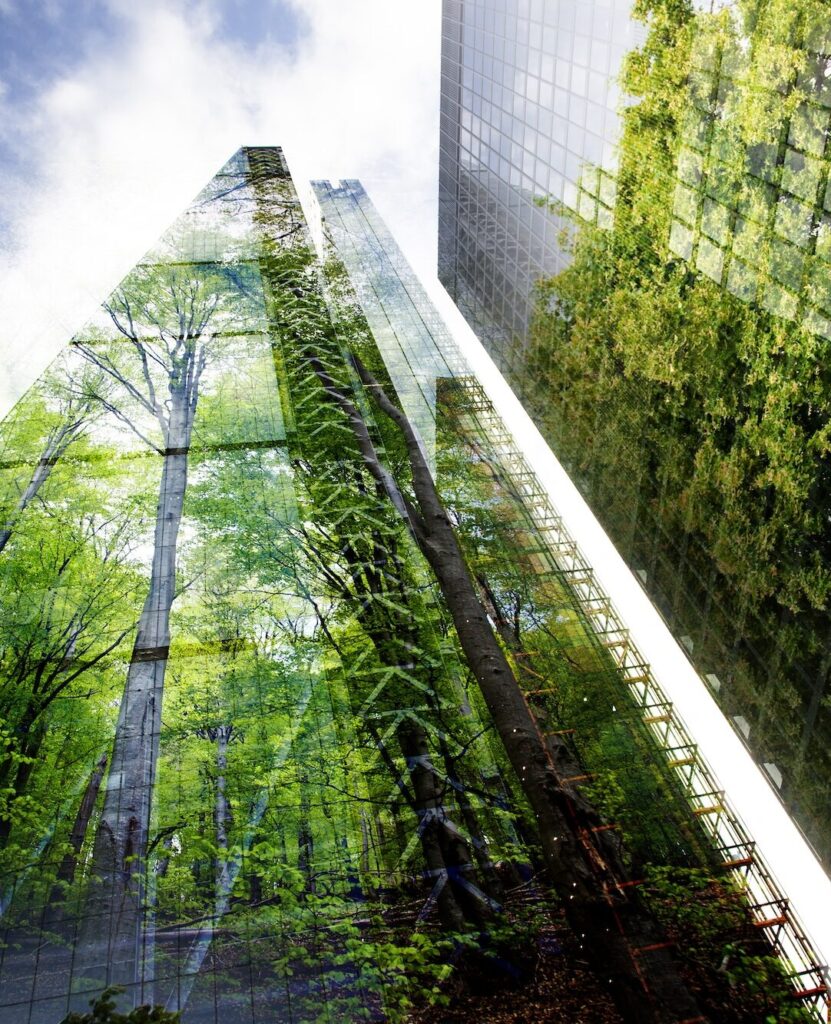
Principle 3: Spatial Configuration and Cognition
The unconscious brain responds sensitively to spatial proportion, volume, and configuration. These elements don’t merely affect how spaces appear, they influence how our brains operate within them.
The neuroscience: Joan Meyers-Levy’s ceiling height research demonstrates that higher ceilings promote abstract, creative thinking known as freedom-oriented processing, while lower ceilings enhance concrete, detail-focused thinking known as confinement-oriented processing. Circulation patterns affect stress through predictability and ease of wayfinding. Room proportions trigger responses rooted in evolutionary preferences for certain spatial relationships. The science is in our DNA, and with appropriate knowledge, we can infuse it into designs to ensure our clients feel good in the spaces we create.
Learn more in our Spatial Design & Neuroscience deep dive

Principle 4:
Texture and Sensory Experience
Tactile experience activates the somatosensory cortex and triggers emotional processing centers. Natural materials like wood, stone and natural fibers are consistently shown to generate positive responses. Smooth, cold, synthetic surfaces correlate with elevated stress markers.
The neuroscience: Our sense of touch is deeply connected to emotional processing. When we touch natural materials, our brains recognize patterns and textures that we evolved with for millions of years. Synthetic materials lack this evolutionary resonance, creating subtle stress responses we may not consciously register but that affect us nonetheless.
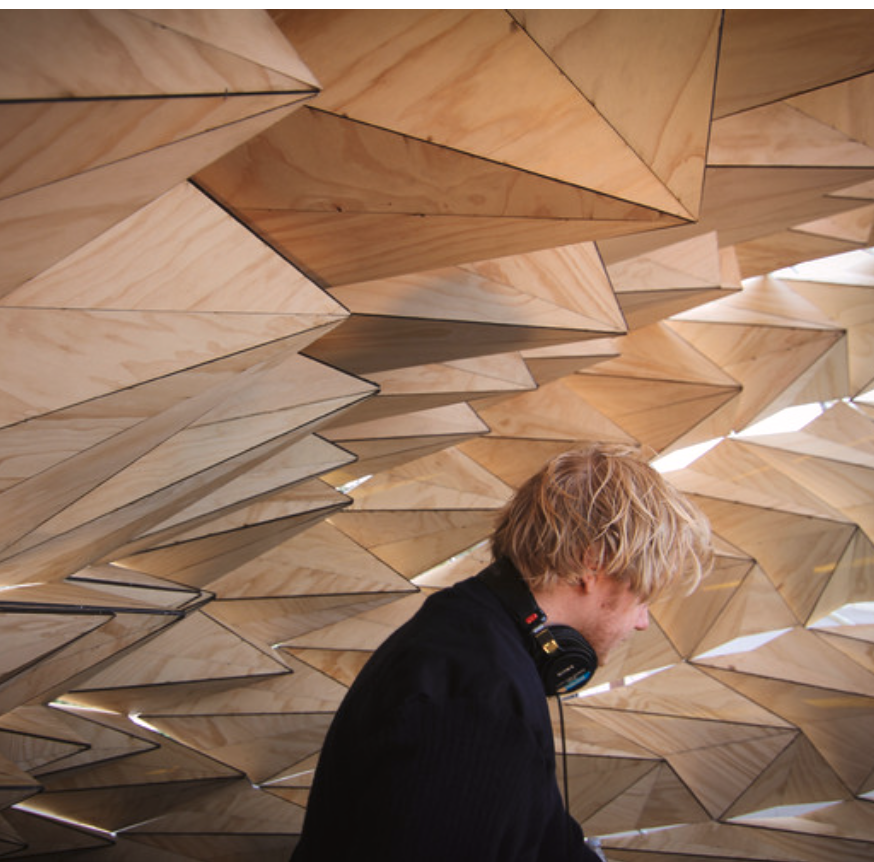
Principle 5: Acoustic Environment
Unpredictable noise elevates cortisol and maintains heightened stress states. Pleasant ambient sounds reduce stress markers and improve concentration.
Some common design strategies used to create a positive acoustic environment include soft furnishings that absorb sound, intentional furniture placement, acoustic panels, white noise systems or water features, and separating noisy activities from quiet zones.
Download our Neuroaesthetic Design Client Conversation Guide to keep these principles in mind when designing for your clients’ health and well-being.
IV. Designing for the Unconscious Mind

The Subliminal Brain & Fractal Fluency
Your clients’ brains are already fluent in a visual language they’ve never consciously learned: the language of fractals. It’s a language our bodies have developed an understanding of over millions of years.

Visual Demonstration: The Language Your Brain Already Speaks
Look at this tree. Notice how the same branching pattern repeats at different scales. Your visual system recognized this instantly as “natural” and “correct.” You didn’t have to think about it.
This is fractal fluency: your brain’s innate ability to read nature’s visual language. When clients enter spaces with fractal patterns, their unconscious brain immediately registers: This feels right.
The Subliminal Brain & Fractal Fluency
Professor Richard Taylor’s research reveals that our visual systems evolved in fractal-rich natural environments. Artificial spaces without these patterns create stress, visual fatigue, and cognitive strain. It’s like living somewhere where you don’t speak the language.
V. Real-World Applications
Healthcare Environments
Khoo Teck Puat Hospital in Singapore represents the gold standard in neuroaesthetic design. Patient recovery times shortened, pain medication requirements reduced, and patient satisfaction scores increased significantly.
Cancer treatment facilities, like Maggie’s Centres, also integrate neuroaesthetic design strategies that demonstrate similar results. Patient stress levels measurably drop in these environments compared to traditional facilities.
If hospitals worldwide use neuroaesthetics to heal patients, shouldn’t residential and commercial designers apply these same principles?
Science is on our side. Get certified now.
VI. Transform Your Interior Design Practice
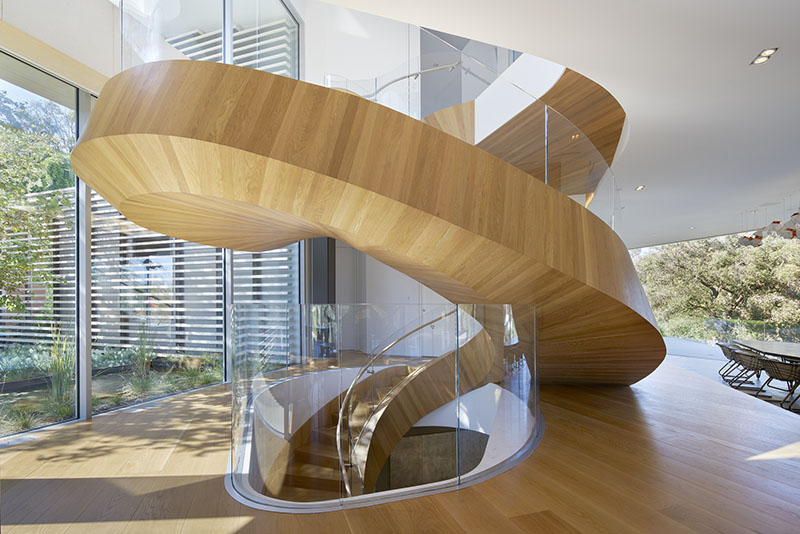
Old Way vs The New Way
Designers are moving beyond “I think this will look nice” and “Trust me, I’m a designer” to far more compelling evidence. Instead, imagine discussing design plans with your clients in ways that share scientific facts. Think of the way your value will change, in actuality and perception, when you can share information such as “research shows this reduces stress by 15%.”
That’s the shift Science in Design® makes possible. Our certification transforms intuition into evidence, and proof into trust.
What Changes for You
Pricing power increases dramatically. Science-backed design commands premium fees. When clients understand you’re not simply decorating but improving their health based on scientific research, price objections decrease.
Client trust deepens immediately. You’re not asking them to trust your taste, you’re presenting research from reputable institutions like Harvard and Johns Hopkins.
Referrals multiply organically. Clients say, “My interior designer used science-backed strategies to create a space that measurably reduced my stress.”
Professional pride and validation. Your intuition is validated. You always knew your work mattered. Now you have the science proving it.
Marketing differentiation becomes effortless. Your website, social media, and marketing materials communicate value that goes far beyond aesthetics.
Designer Testimonials
“Learning the science behind how design shapes our nervous system has been nothing short of transformative—for my clients and for my business. With a background in neuroscience and years of exploring biomimicry through art and product design, I’ve long felt the connection between beauty and biology. Now, through neuroaesthetics and biophilic principles, I can confidently strip away the guesswork and present design not as opinion—but as prescription. My process now mirrors that of a clinician—measuring stressors, identifying sensory patterns, and crafting spaces that truly regulate and restore. It’s the deepest level of bespoke: spaces designed in harmony with a client’s neurobiological fingerprint.” — Erica McLain, MXD Interiors, Dallas, Texas
“The Science in Design Certification was immensely impactful for my interior design career, providing a robust framework to integrate proven scientific principles into my wellness design practice.” — Patricia Kennedy, Rendezvous Design
“The Science in Design Neuroaesthetic Certification course deepened my commitment to creating homes that truly support my clients’ lives, health, and overall wellbeing. It highlighted how, for many clients in the UK, wellbeing-led design is often seen as separate from more colourful, expressive interiors. This insight has reinforced the opportunity to thoughtfully bridge the gap between spaces that feel vibrant and personal, and those that genuinely enhance wellbeing.” — Roberta Baldan, London, England
VII. Resources & Next Steps
Free Resources
Download our Client Conversation Guide Learn how to easily communicate the principles of neuroaesthetics to your clients and how your design benefits their health and wellbeing.
Check Out Our Certification Program Introduction Mike Peterson provides a comprehensive overview of how neuroaesthetics is transforming the industry. Link?
Watch Our Free Webinars Learn from scientific experts and experts in the field of interior design in our free webinar series, covering everything from marketing your science-backed design services to fractal fluency.
Explore Our Comprehensive Guides:
- Color Psychology in Neuroaesthetic Design →
- Lighting Design for Brain Health and Wellness →
- Spatial Design & Neuroscience →
Join the Science in Design LinkedIn Community Connect with 200+ certified designers and stay current on the latest research.
Science in Design® Certification Program

What you’ll gain: A comprehensive understanding of neuroaesthetic and biophilic design principles, plus how to market your science-backed practice.
Program Details:
- 22 self-paced classes
- 13 IDCEC-approved credits
- Up to one year to complete
- Faculty from UPenn, Johns Hopkins, University of Oregon, Boston Architectural College, University of Texas, and more.
Explore the Full Certification Program →
VIII. Frequently Asked Questions
Is neuroaesthetics just for luxury design? No. Neuroaesthetic principles apply regardless of budget. The science works at every price point.
Do I need a science background? Absolutely not. The certification program translates complex neuroscience into designer-friendly principles and practical applications.
Will clients actually care about the science? Overwhelmingly, yes. Clients increasingly expect wellness-focused solutions. Science becomes a powerful tool for building trust and communicating value.
How is this different from evidence-based design? Neuroaesthetics applies neuroscience to understand why certain designs affect us, including the biological mechanisms behind these effects. This allows designers to apply principles across all project types with confidence.
Can I start before getting certified? Yes! Start with our free resources. You can watch our free webinars or download our client conversation guide to get started now. Certification provides comprehensive knowledge, academic backing, and the credentials to establish authority.
What’s the ROI on certification? Certified designers report premium fee increases, new client acquisition, stronger referrals, media opportunities, and speaking engagements. Many recoup certification investment with their first post-certification project.