
Biophilic Design for Residential Spaces: Creating Homes That Heal
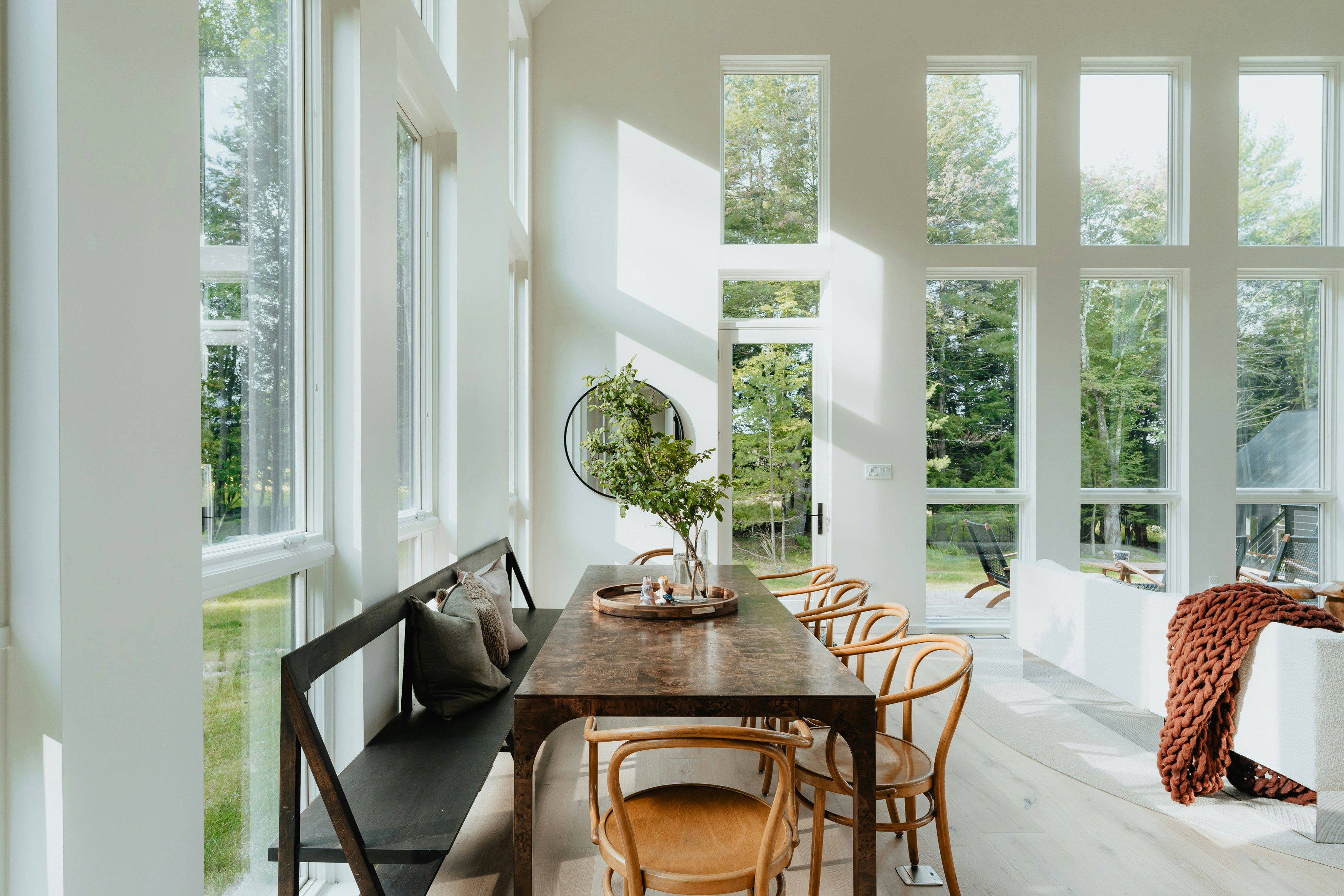
As the industry’s leading authority on neuroaesthetics, Science in DesignⓇ has spent years translating neuroscience research into actionable design strategies. A significant part of that work focuses on biophilic design: the practice of incorporating nature into built environments to support human health and well-being. While neuroaesthetics helps us explain why beauty heals, biophilic design provides the specific framework for bringing nature’s restorative power into the spaces where your clients spend most of their lives: their homes.
Your clients spend 62% of their waking hours at home; even more if they work remotely, and yet, most homes overlook how these spaces affect physical health, emotional wellbeing, and cognitive performance.
The research is compelling: residents of biophilically designed homes report better sleep quality, reduced stress levels, improved mood, and enhanced creativity. Children show better focus and academic performance. Even physiological markers improve, including.
The Residential Advantage
Residential spaces offer unique opportunities that commercial environments cannot match:
- Complete control – Homeowners can open windows, adjust temperatures, modify lighting, and personalize every detail
- All-day engagement – Multiple opportunities for restorative contact with nature across working, relaxing, eating, sleeping, and socializing
- Freedom to experiment – Little-to-no institutional regulations constraining design choices
- Long-term benefits – Ongoing exposure to biophilic elements compounds health improvements over time
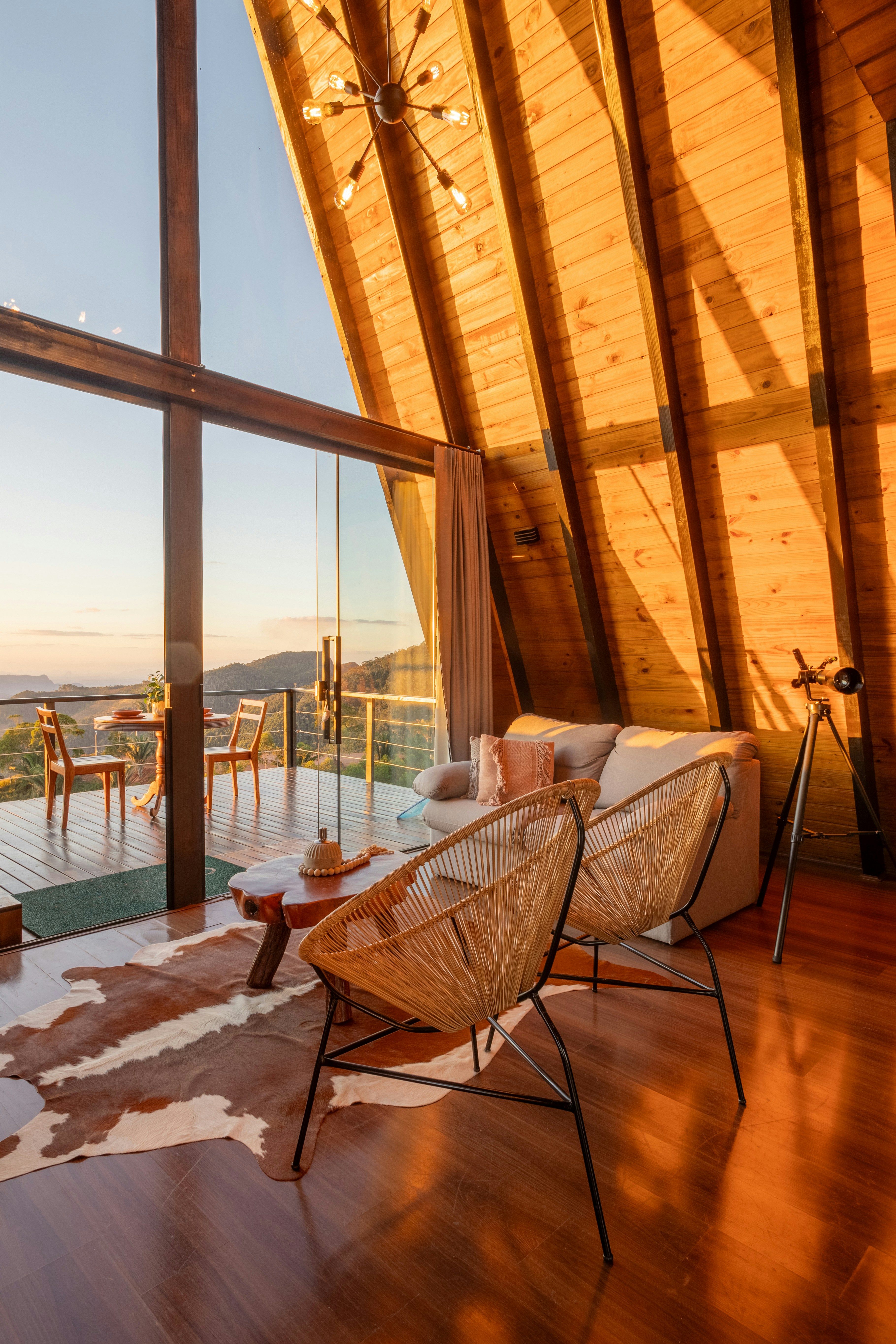
Core Strategies for Residential Biophilic Design
1. Maximize Natural Light
Biophilic Patterns: Dynamic & Diffuse Light, Connection with Natural Systems
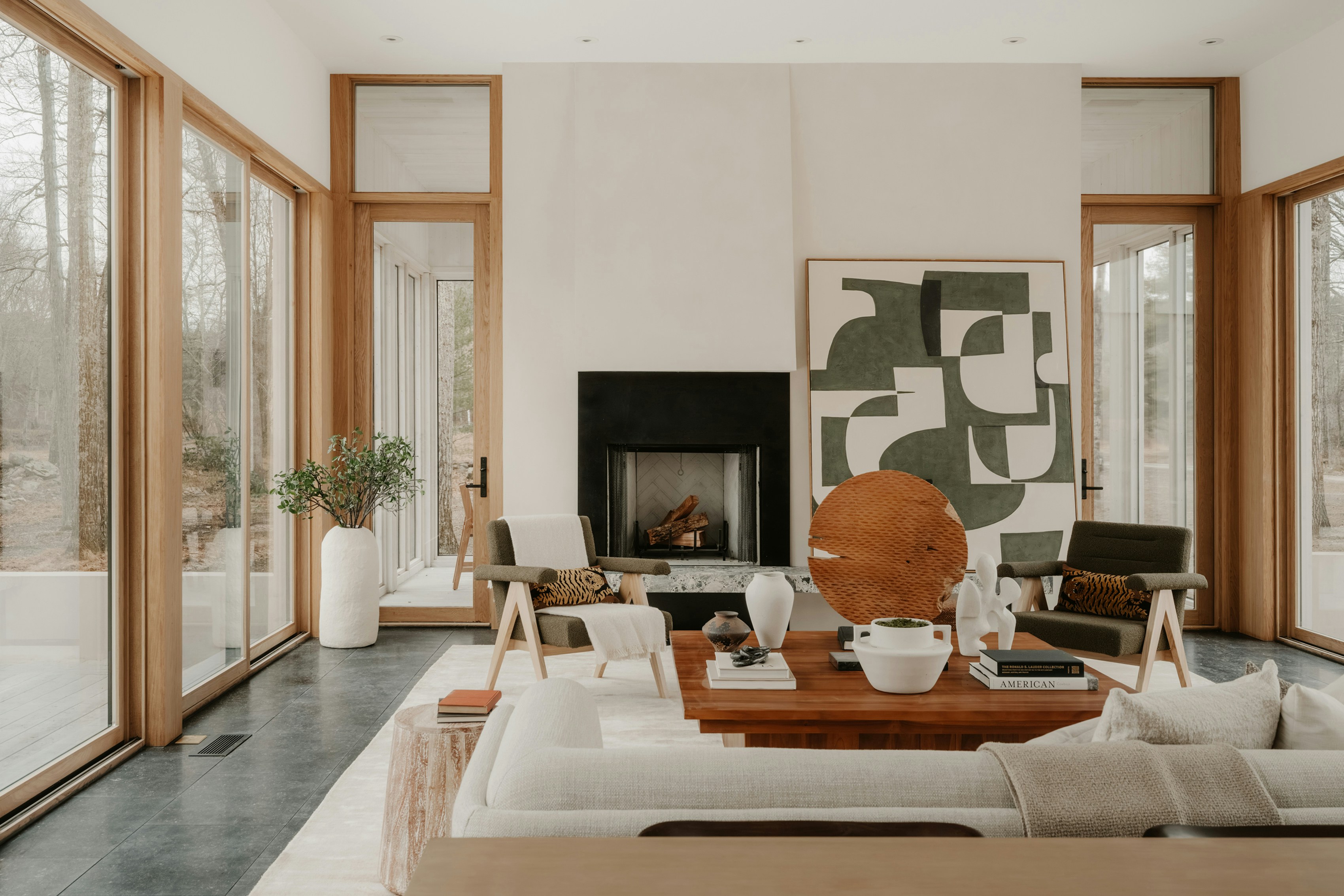
The biological clocks governing sleep, hormone production, mood, and countless other functions, also known as our circadian rhythms, depend on exposure to natural light patterns throughout the day. Yet it’s often the most overlooked biophilic element in residential design.
Implementation strategies:
- Prioritize window placement early in design: south-facing for consistent daylight, east-facing for morning light, west-facing for warm afternoon light
- Use sheer treatments that filter rather than block light
- Add skylights or solar tubes to bring daylight deep into floor plans
- Place mirrors strategically to amplify available daylight
- Consider how light interacts with finishes; matte surfaces diffuse softly, glossy surfaces create highlights
Tye Farrow discusses the benefits of daylight in our webinar together, as well as how best to communicate these science-backed design principles to your residential clients.

2. Integrate Indoor Plants Thoughtfully
Biophilic Patterns: Visual Connection with Nature, Non-Rhythmic Sensory Stimuli, Biomorphic Forms & Patterns
Strategic plant selection creates visual harmony while providing measurable air quality and psychological benefits. By layering plant heights, we’re able to mimic the complexity and order found in natural ecosystems, creating intentional connections to living systems.
-
Layer plant heights for natural hierarchy:
- Tall floor plants (fiddle-leaf figs, bird of paradise) anchor corners and frame views
- Medium-height plants on stands create eye-level interest
- Trailing plants from shelves soften architectural edges
- Small tabletop plants provide intimate green moments
-
Match species to actual conditions:
- Low light: snake plants, pothos
- Bright, direct sun: succulents, cacti
- High humidity: ferns, orchids, peace lilies
3. Specify Natural Materials Throughout
Biophilic Patterns: Material Connection with Nature, Complexity & Order, Non-Visual Connection with Nature
Natural materials carry information our senses evolved to read, providing psychological benefits even when we’re not consciously aware of them. Wood flooring grounds a space literally and figuratively, with visible grain patterns providing the fractal complexity our visual systems crave. Stone connects interiors to geology and deep time; a marble countertop shows millions of years of geological processes in its veining.
Key materials and applications:
- Wood flooring – Wide-plank hardwood with visible grain provides fractal patterns at multiple scales
- Stone surfaces – Use where touch is frequent (countertops, fireplace surrounds, bathroom vanities)
- Natural fiber textiles – Layer wool, jute, sisal, linen, and cotton for visual and tactile richness
- Leather furniture – Develops patina over time, telling the story of use
Exposed structural elements – Timber beams, brick walls maintain connection to building traditions
4. Frame Views to Nature
Biophilic Patterns: Visual Connection with Nature, Connection with Natural Systems, Prospect, Refuge, and Mystery
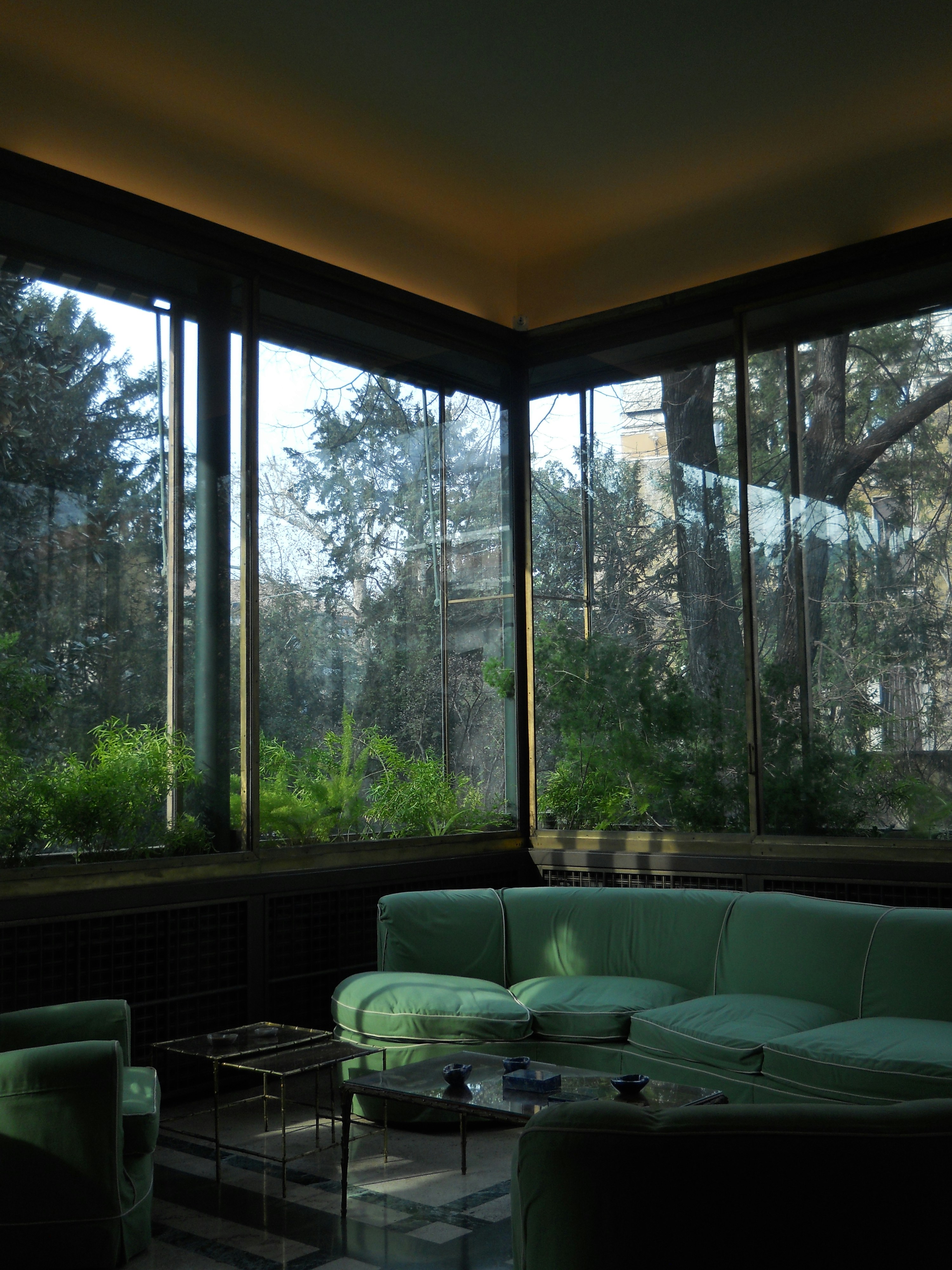
How you frame views to outdoor spaces can be as important as the views themselves. Think of windows as carefully composed connections between interior and exterior environments that can incorporate multiple biophilic patterns simultaneously. A sofa positioned to overlook a garden creates ongoing connection to seasonal changes while providing prospect, the evolutionary advantage of surveying your environment from a position of safety.
Strategies for maximizing views:
- Orient seating toward windows and gardens, not blank walls
- Use large-scale glazing or floor-to-ceiling windows where possible
- Install corner windows to eliminate psychological barriers
- Create interior green walls where exterior views aren’t available
- Layer views at multiple distances: foreground, middle distance, and distant vistas
Science in Design Certified designers are able to match and pair biophilic elements to have maximum impact. Many opt for integrating the principle of prospect and refuge, offering expansive views from covered or enclosed spaces.
Want to become an expert in implementing biophilic design principles in your business? Get certified now.
5. Incorporate Water Features
Biophilic Patterns: Presence of Water, Non-Rhythmic Sensory Stimuli, and Non-Visual Connection with Nature
Water signifies life in human consciousness. Its presence, whether seen, heard, or touched, triggers profound biological responses across cultures and climates. The sound of trickling water creates what acousticians call “pink noise,” a naturally occurring sound pattern that promotes focus and relaxation while masking distracting environmental sounds.
Applications by space:
- Living rooms/offices – Tabletop fountains create ambient sound
- Courtyards – Outdoor features visible from inside add movement and attract wildlife
- Studies – Aquariums combine water, movement, and living systems
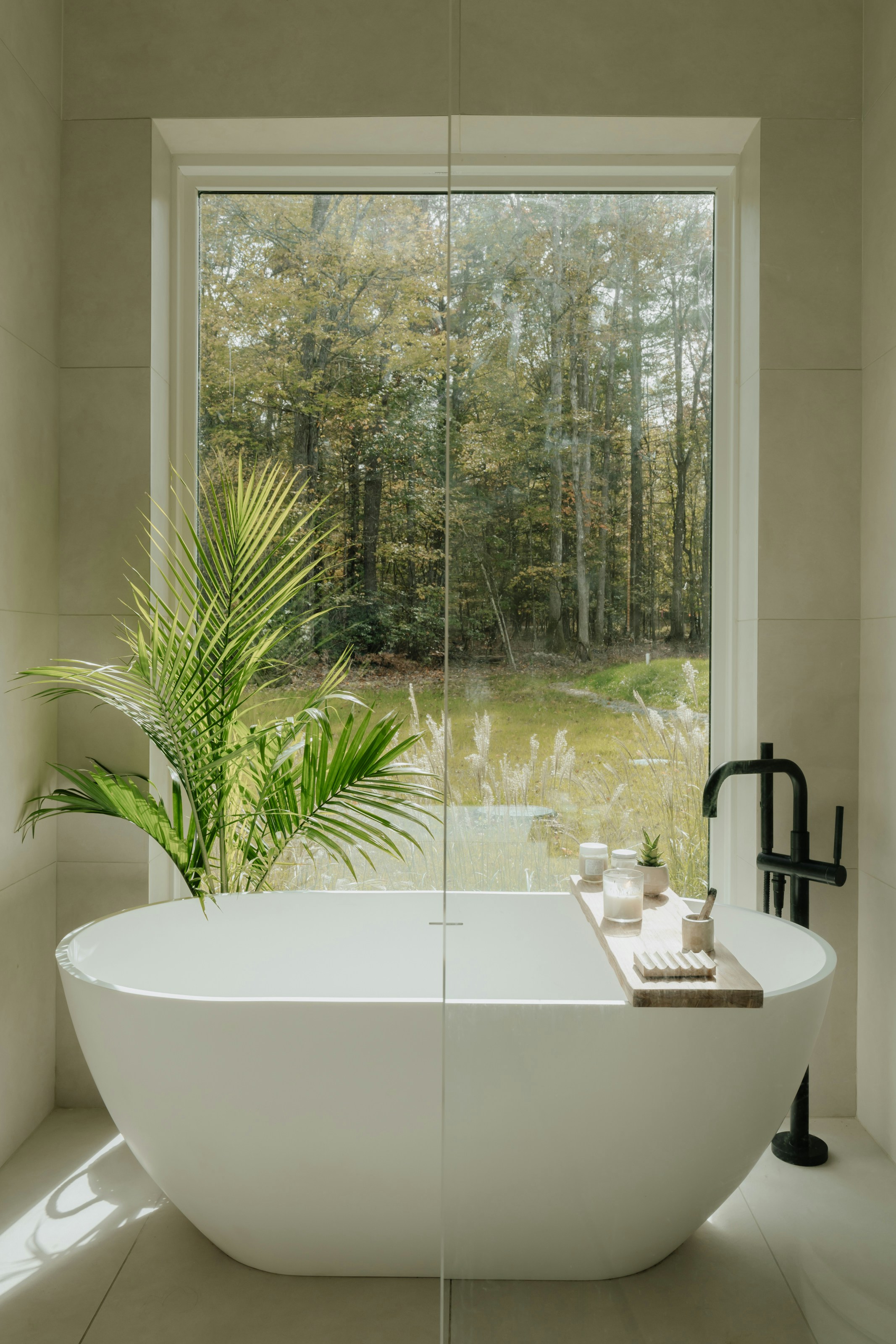
- Bathrooms – Rainfall showerheads and deep soaking tubs evoke natural water experiences
6. Choose Organic Furniture Forms
Biophilic Patterns: Biomorphic Forms & Patterns, Complexity and Order
Furniture shapes influence how spaces feel at a subconscious level. Harsh rectilinear forms with sharp corners feel fundamentally different from organic shapes with flowing curves and our evolutionary biology responds accordingly. This doesn’t mean avoiding all straight lines, but rather balancing architectural forms with organic furniture shapes.
Select pieces that echo nature:
- Curved sofas and chairs mirror flowing natural lines
- Live-edge wood tables celebrate the tree’s original form
- Round or oval tables mimic circular gatherings around fires
- Tapered legs resemble tree trunks

Biophilic Patterns: Material Connection with Nature, and Visual Connection with Nature
Biophilic design goes beyond color psychology by grounding choices in the actual palettes humans encountered throughout evolution, and they’re biological responses shaped by millions of years of natural selection.
Color families and their effects:
- Earth tones (ochres, siennas, terracotta) – Feel stable and grounding, signifying solid earth
- Greens (sage to forest) – Associated with life, growth, vitality; overwhelmingly restorative
- Blues (sky to deep water) – Reduce anxiety, promote focus; mirror essential natural elements
Warm neutrals (creams, beiges, taupes) – Provide visual rest while maintaining connection to sand, stone, grasses
7. Apply Nature-Inspired
Color Palettes
Layer Fractal Patterns Strategically
Biophilic Patterns: Complexity & Order, Biomorphic Forms & Patterns
Fractal patterns are self-similar designs that repeat at different scales, and referred to as “nature’s fingerprint.” Research shows that viewing fractals with specific mathematical properties (fractal dimensions between 1.3 and 1.5) reduces stress by up to 60% within minutes. These patterns work even below conscious awareness.
Where fractals appear naturally:
- Botanical prints on textiles and wallpapers
- Wood grain in flooring and furniture
- Stone veining in countertops and accents
- Nature photography showing branching structures
- Hand-woven textiles with organic irregularity
13×9 Design teamed up with Dr. Richard Taylor to create research-inspired fractal-patterned home furnishings. See how their designs are being used in residential and commercial designs here:
Room-by-Room Applications
Living Rooms: The Heart of Biophilic Residential Design
Primary Patterns: Visual Connection with Nature, Prospect, Refuge, and Presence of Water
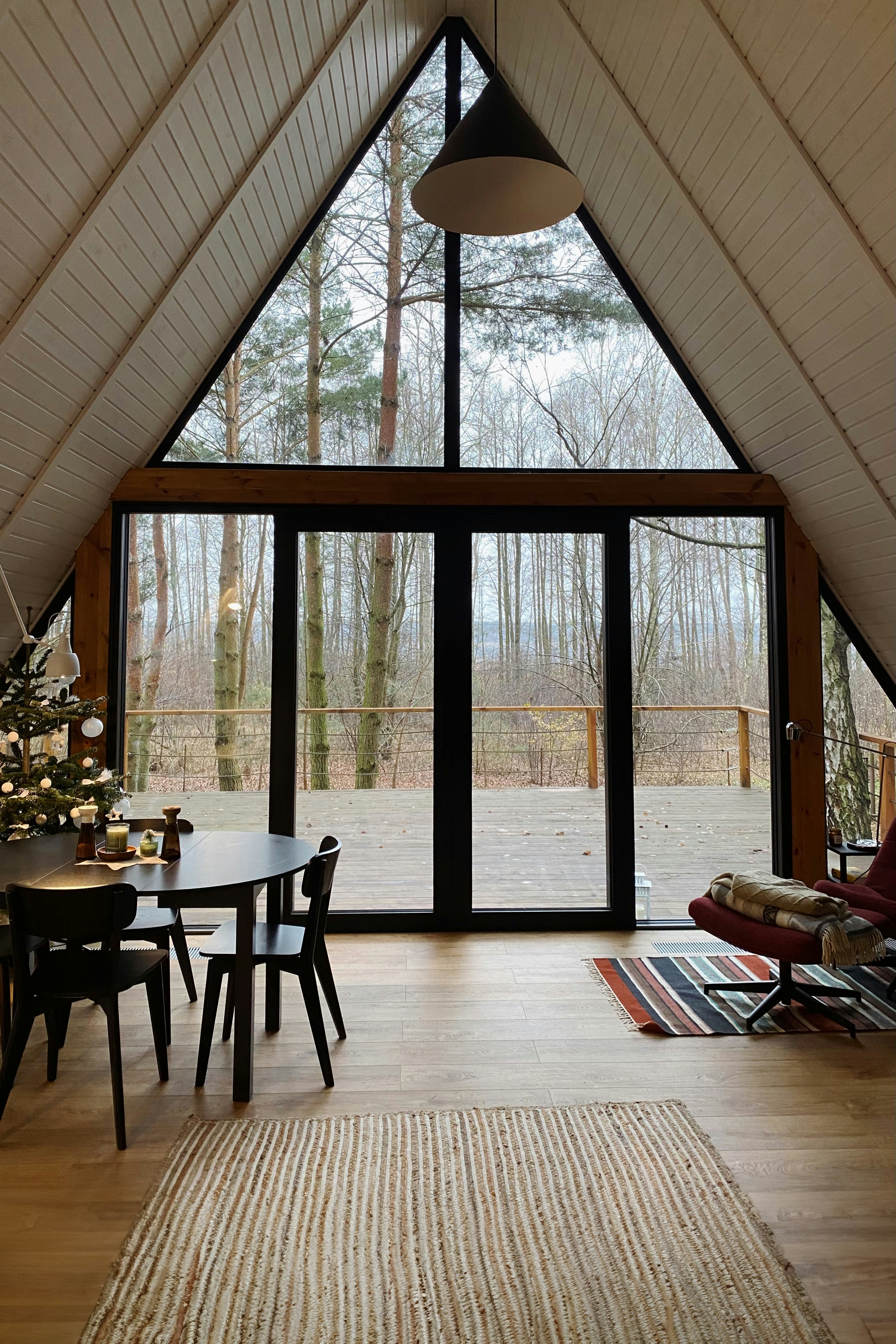
Living rooms offer the greatest opportunity for biophilic interventions because they’re where families gather, guests are entertained, and significant time is spent throughout the day. The key is positioning seating to maximize natural light and views rather than defaulting to furniture facing a television. This creates ongoing connection to outdoor environments, seasonal changes, and natural light cycles while providing the prospect our psychology craves.
Consider how seating arrangements create both prospect and refuge. A chair positioned to overlook the room while backed by a wall or bookcase provides both views and protection, which is the combination humans find most psychologically comfortable.
Essential elements:
- Position seating to maximize views and natural light
- Incorporate substantial plants (fiddle-leaf figs, palms, bird of paradise) as architectural statements
- Use natural wood furniture with visible grain patterns and stone accents
- Add water feature or fireplace as focal point, as both trigger deep biological responses
- Balance prospect (open views) with refuge (protected seating areas)
Bedrooms: Optimizing Spaces for Restoration
Primary Patterns: Dynamic & Diffuse Light, Refuge, and Material Connection with Nature

Bedrooms are private retreats where we spend roughly a third of our lives, making them ideal for intensive biophilic interventions focused on rest and restoration. The bedroom embodies refuge perhaps more than any other space; it’s our most protected, private sanctuary. Enhance this quality through lowered ceilings over the bed area, canopy beds, or overhead fabric treatments, while maintaining views to nature that keep us connected to natural systems and circadian rhythms.
Natural fiber bedding provides material connection with nature through direct tactile contact during sleep hours, with thermal properties that help regulate body temperature throughout the night.
Design priorities:
- Ensure views of nature or sky from bed for psychological and physiological benefits
- Use natural fiber bedding (linen, cotton, or wool) for temperature regulation
- Install sheer window treatments that filter light while maintaining circadian connection
- Lower ceilings over the bed area or add a canopy for enhanced refuge
- Keep lighting warm and dimmable: bright/cool for morning, warm/dim for evening
- Add oxygen-producing plants (snake plants, orchids
- Layer textures at multiple scales for complexity and order
Kitchens: Nourishment and Natural Connection
Primary Patterns: Visual Connection with Nature, Dynamic & Diffuse Light, and Connection with Natural Systems
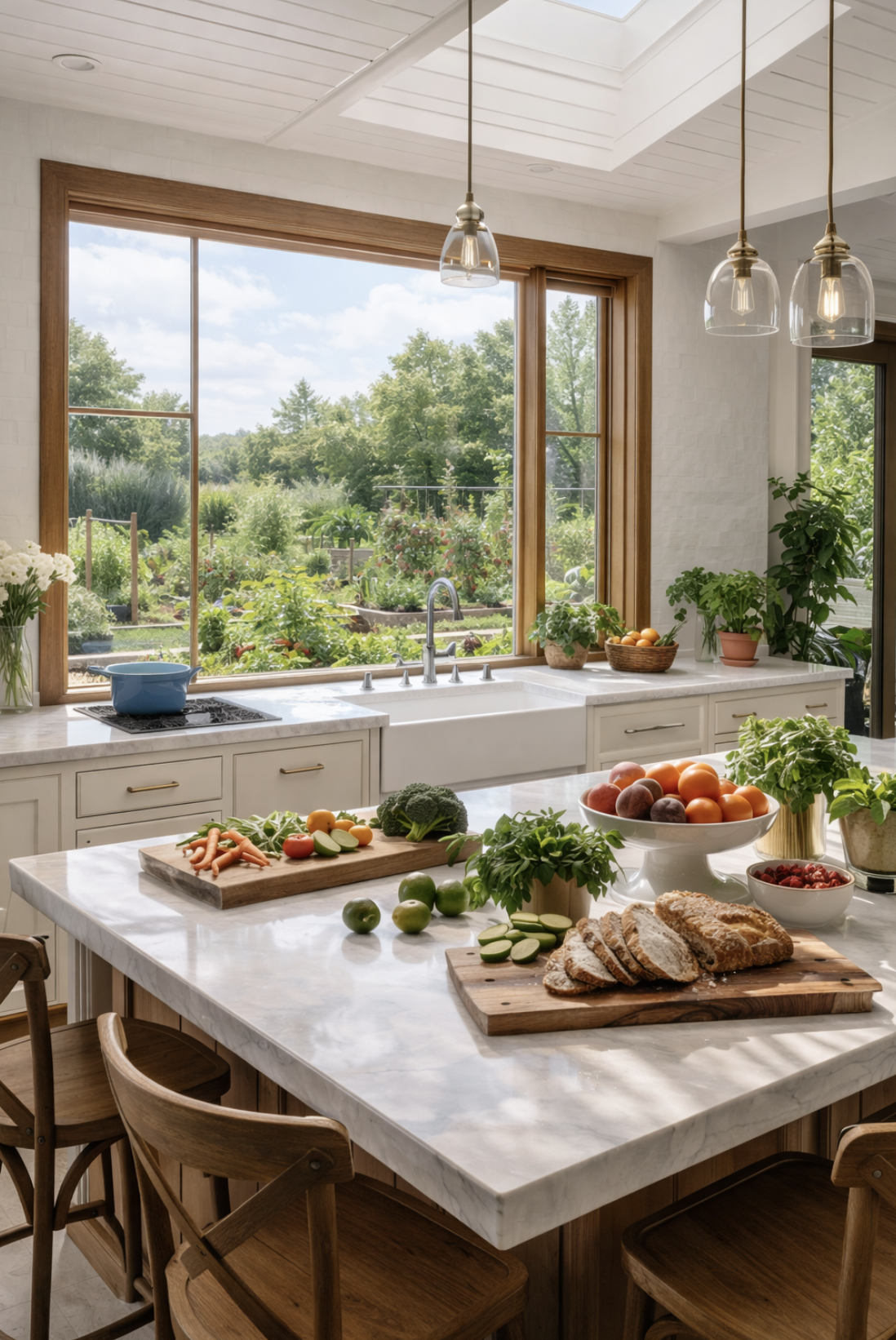
Kitchens are active workspaces where sensory engagement enhances both function and pleasure. A window over the kitchen sink transforms dish washing from a chore into an opportunity to observe outdoor activity like birds, weather changes, the movement of trees, helping to maintain a connection with nature during routine tasks. Dynamic and diffuse light is particularly important here, where tasks range from detailed food preparation requiring bright light to casual dining that benefits from softer illumination.
Create tangible connection between food preparation and natural processes. A window overlooking a vegetable garden makes the source of food visible. Seasonal fruit displays connect meals to natural growing cycles.
Key features:
- Maximize window space above sinks and prep areas
- Use natural stone countertops (granite, marble, soapstone, butcher block) with authentic thermal properties
- Incorporate windowsill herb gardens combining greenery with function
- Choose wood cabinetry with visible grain over glossy synthetics
- Position work surfaces to capture natural daylight
- Add plants that thrive in variable humidity (pothos, spider plants)
Bathrooms: Water, Stone, and Sanctuary
Primary Patterns: Presence of Water, Material Connection with Nature, and Refuge
Bathrooms are inherently connected to water, making them naturals for biophilic enhancement that emphasizes this elemental presence. Natural light transforms bathrooms from purely utilitarian spaces into ones that feel spacious, clean, and connected to circadian rhythms. These enclosed, private spaces for cleansing and renewal can provide powerful refuge.
The sensory experience of water cascading from above or surrounding the body connects to evolutionary memories of rivers, waterfalls, and rain, experiences far removed from the utilitarian spray of a standard showerhead.

Essential upgrades:
- Bring in natural light through windows, skylights, or solar tubes
- Use stone, wood, or natural tile extensively for grounding and authenticity
- Add humidity-loving plants (ferns, orchids, bamboo) that thrive in these conditions
- Install rainfall showerheads and deep soaking tubs for enhanced water experience
- Create refuge through separate enclosures and intimate lighting zones
- Choose organic shapes (round mirrors, vessel sinks) and warm metal fixtures (bronze, brass, copper)
Measuring Success: What Improvement Looks Like
The success of biophilic residential design is measurable in how occupants feel and function:
Sleep improvements – Falling asleep faster, waking more refreshed (dynamic light supporting circadian rhythms)
Stress reduction – Feeling calmer at home, less affected by work demands (fractal patterns and natural materials)
Cognitive enhancement – Improved creativity and focus when working from home (prospect and refuge)
Child development – Better attention spans and emotional regulation (visual connection with nature, complexity, and order)
These aren’t placebo effects. They’re the result of environments designed to support biological needs that evolved over millions of years, but are rarely accommodated in conventional residential design.
By understanding and applying the 14 patterns of biophilic design strategically throughout residential spaces, you create stunning homes that measurably improve the health and wellbeing of everyone who lives in them.