
Biophilic Design: Bringing Nature's Healing Power Into Interior Spaces
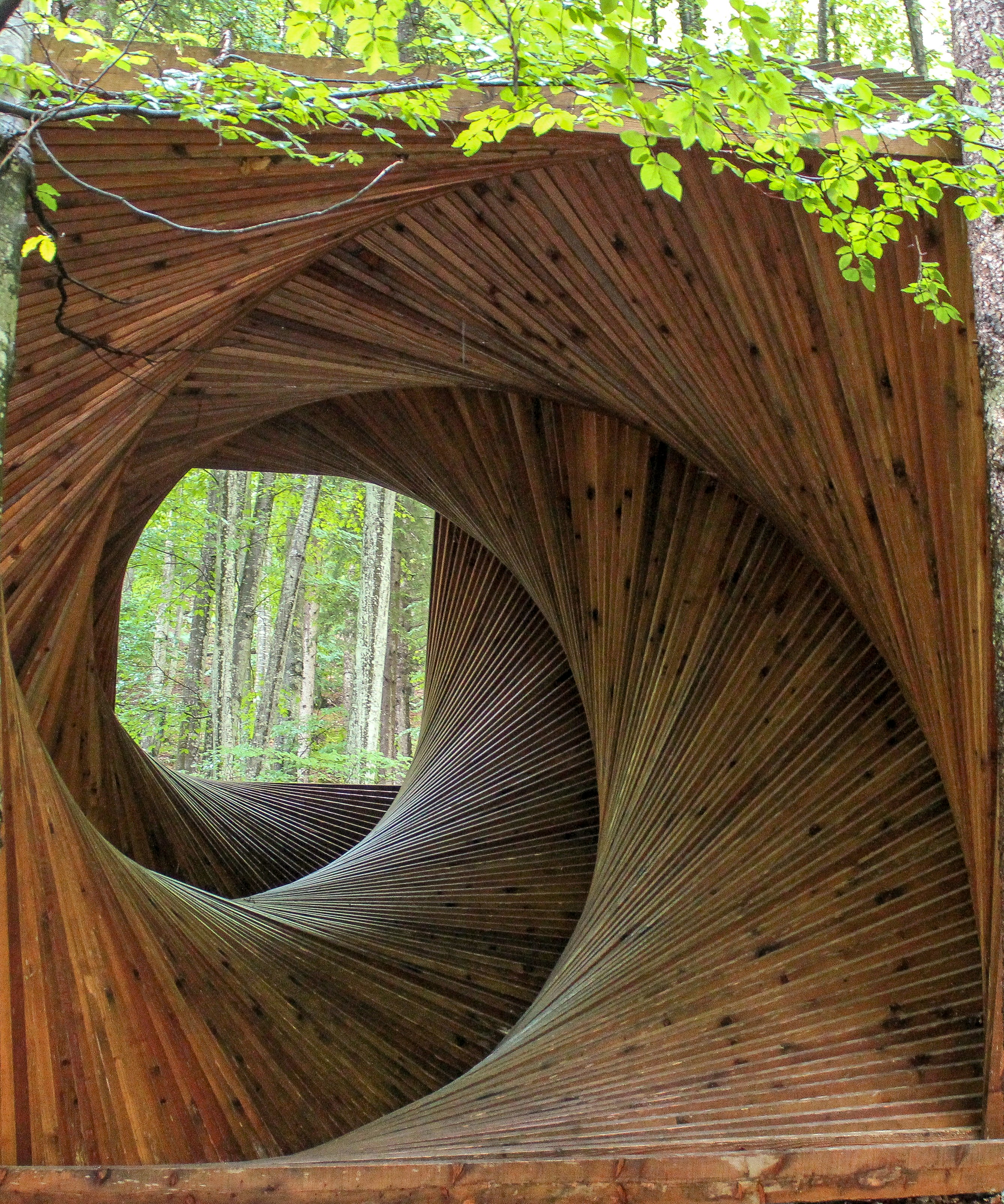
Biophilic design is the deliberate incorporation of nature and nature-inspired elements into interior spaces to support human health and well-being.
The term comes from “biophilia”, which describes our innate, genetically determined affinity for the natural world. For 99.99% of human history, roughly 3.6 billion years, we lived in natural environments surrounded by organic patterns, natural light, and the rhythms of the outdoors.
Today, we spend over 90% of our time indoors, disconnected from the environments our bodies are hardwired to need. Biophilic interior design bridges this gap through two approaches: natural biophilia (living plants, natural materials, water features, and daylight) and biomimicry (nature-inspired patterns, botanical prints, fractal designs, and organic forms). Both work because they tap into something evolutionary: the fact that our bodies haven’t forgotten what our modern lives have left behind.
Download our free Biophilic Design Implementation Guide and discover research-backed strategies you can apply immediately to reduce stress, improve well-being, and create environments that truly heal.
Biophilic Design: The Science & Research Foundation
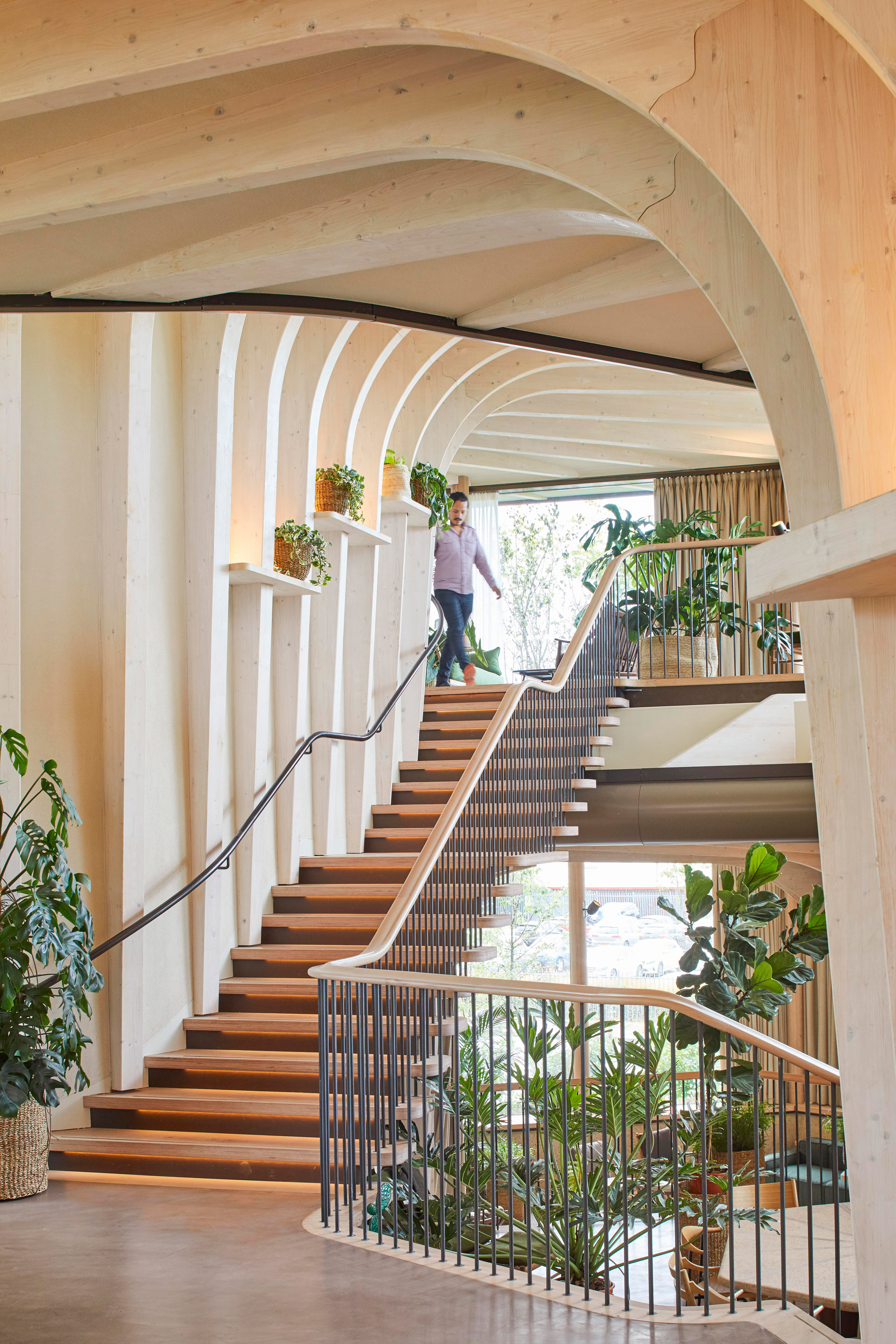
The health benefits of biophilic interior design are proven: lowered physiological stress markers and psychological anxiety, faster surgical recovery, and universally positive mood scores. Hospitals like Singapore’s Khoo Teck Puat have made biophilic design their global standard. Groundbreaking fractal research from universities like Oregon and Yale continues to reveal the positive impact nature-inspired patterns have on our brains.
Medical facilities worldwide are using nature-inspired design to heal their patients. The question for architects and interior designers is simple: if the healthcare industry relies on biophilic design to improve patient outcomes, shouldn’t we be using it for our clients? Patients?
Proven Health Benefits
The research is clear: biophilic design creates measurable, positive physiological and psychological changes in the human body.
Physical Benefits of Biophilic Interior Design:
- Faster post-surgical recovery times
- Lower blood pressure and heart rate
- Reduced cortisol (stress hormone) levels
- Improved immune function
- Better sleep quality
Mental & Cognitive Benefits of Biophilic Interior Design:
- Physiological and psychological reduction in stress and anxiety
- Improved cognitive function and problem-solving
- Enhanced mood and emotional well-being
- Better concentration and mental clarity
These aren’t subjective improvements, they’re documented, measurable outcomes that science can track and verify.
These are the real-life health impacts your design has on your client’s lives.
Biophilic Design in Action:
Real-World Healthcare Examples
Images of Khoo Teck Puat Hospital and Maggies Centres.
When the medical industry, where outcomes are literally life and death, adopts a design philosophy, it’s worth paying attention.
Khoo Teck Puat Hospital in Singapore is where healthcare designers from around the world make pilgrimages to see biophilic design in full effect. Winner of the Stephen R. Kellert Biophilic Design Award, this hospital is designed with 100% biophilic principles and stands as the global gold standard for nature-integrated healthcare.
The facility features hundreds of species of plant life, water features, natural ventilation, fractal patterns, and sight lines to greenery from nearly every space. The results are measurable: improved patient outcomes, faster recovery times, and reduced stress for both patients and staff.
Maggie’s Centres, specialized cancer care facilities across the UK, are designed entirely around biophilic principles featuring abundant natural light, fractal patterning in materials and finishes, natural color palettes, and generous access to gardens and greenery. The design isn’t purely decorative; it’s therapeutic. Patients report improved emotional well-being, reduced anxiety, and a greater sense of calm and hope. The architecture itself becomes part of the healing process.
More Evidence In Favor of Biophilic Design: From Forests to Hospitals
Shinrin-Yoku (Forest Bathing): Japanese research on “forest bathing”, or simply spending time in nature, shows measurable reductions in cortisol, blood pressure, and heart rate, along with improved immune markers. Biophilic interior design brings these same benefits indoors.
Roger Ulrich’s 1984 Study: Research published in Science journal found that surgical patients in hospital rooms with views of trees required significantly less pain medication and had shorter hospital stays than those with views of brick walls.
The pattern is undeniable: nature heals, and in today’s world where we spend the vast majority of our time indoors, design is the delivery system.

shouldn’t we be using it for our clients?
Academic Authority:
The Researchers Leading the Field
Biophilic design isn’t trend-driven, it’s research-backed, with decades of study from leading institutions and experts. At Science in Design, we’re fortunate to have many leaders of the biophilic design movement as a part of our faculty, educating designers on the science behind design choices that contribute to health and wellbeing.
E.O. Wilson (Harvard University): Biologist and author who introduced the biophilia hypothesis in 1984, proposing that humans have an innate tendency to seek connections with nature.
Stephen Kellert (Yale University): Pioneer in biophilic design research, co-author of The Practice of Biophilic Design, and one of the first academics to translate biophilia theory into design frameworks.
Terrapin Bright Green: The definitive authority on biophilic design implementation. Their 14 Patterns of Biophilic Design framework is the industry standard for translating research into practice. Two members of Terrapin Bright Green, Catie Ryan Balagtas and Bill Browning, are part of the Science in Design faculty.
Dr. Richard Taylor (University of Oregon): A member of the Science and Design faculty, Dr. Richard Taylor is the leading researcher in fractal patterns and their impact on stress reduction, cognition, and visual comfort. His work reveals why nature’s repeating patterns calm our brains.
Dr. Anastasija & Martin Lesjak (13&9 Design): Interdisciplinary team combining medical expertise with architectural practice, focusing on how biophilic and fractal elements can be integrated into everyday built environments. Learn more from this team and Dr. Richard Taylor in our webinar, Nature’s Design Blueprint for Well-Being.
Science In Design Certified designers gain knowledge from a faculty of interdisciplinary experts who share cutting-edge research on the impact of design on human health and well-being. Ready to join the movement?
Terrapin Bright Green’s 14 Patterns of Biophilic Design
Terrapin Bright Green’s framework becomes invaluable for designers who want to implement biophilic design principles into their practice. Their research has identified 14 specific patterns that consistently trigger positive biological responses in humans, including stress reduction, improved cognition, and enhanced well-being. They can be applied to residential and commercial spaces in varying configurations to achieve the health benefits your client desires.
These patterns are organized into three categories based on how they connect us to nature: direct physical presence, organic representations, and spatial configurations that echo our evolutionary past.
Physical Presence of Biophilic Design:
Nature in the Space
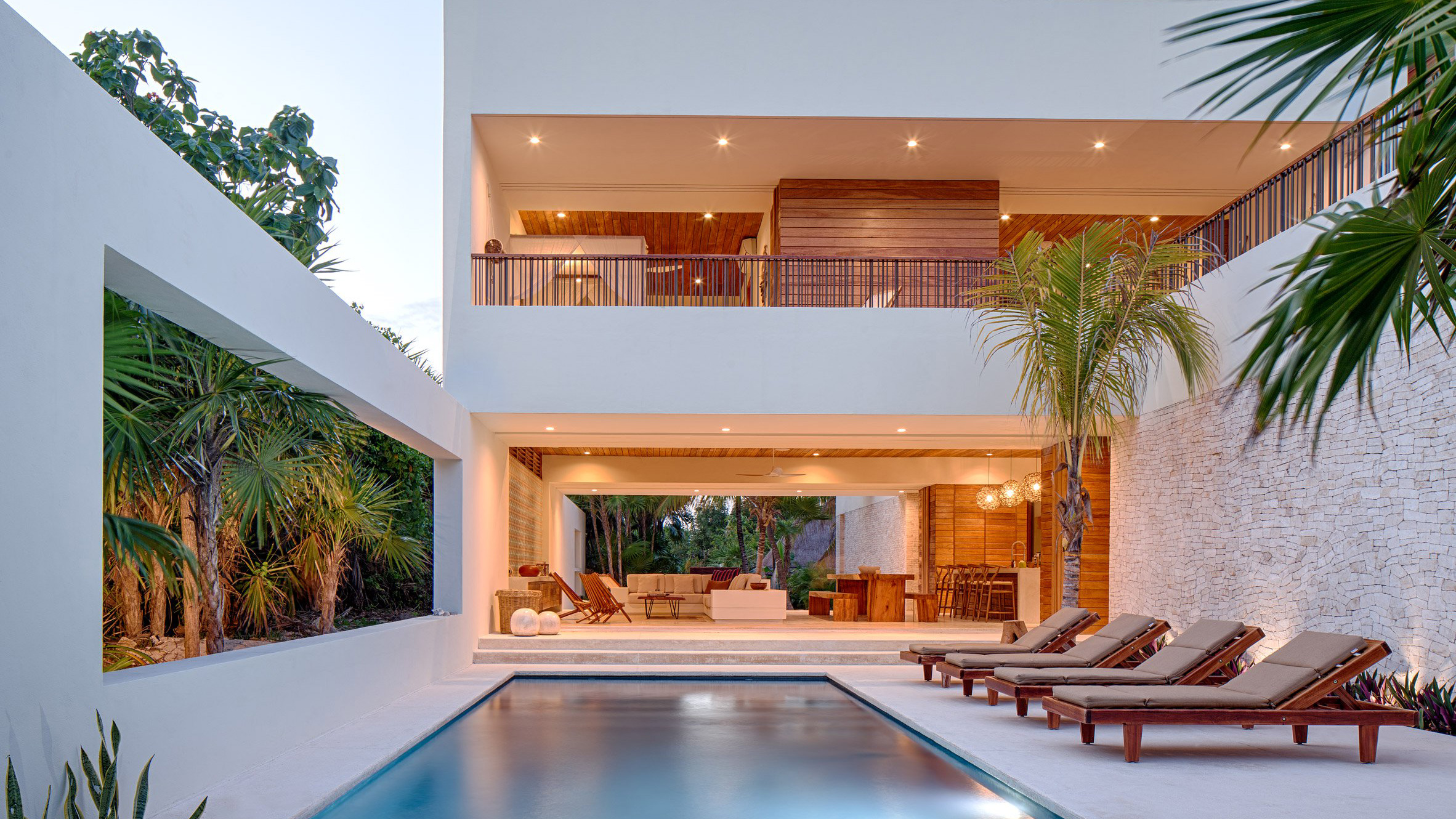
These principles include the direct physical presence of nature.
- Visual Connection with Nature
A visual connection with nature is created when occupants can see living systems, natural processes, or landscapes from within a space. This may include views to gardens, interior plantings, aquariums, or even thoughtfully selected nature artwork that evokes organic forms and life beyond the built environment. - Non-Visual Connection with Nature
A non-visual connection with nature engages the senses beyond sight, incorporating auditory, tactile, olfactory, or even gustatory experiences that recall the natural world. Elements such as birdsong, flowing water, natural scents, and richly textured materials like wood or stone deepen this sensory relationship. - Non-Rhythmic Sensory Stimuli
Non-rhythmic sensory stimuli refer to subtle, unpredictable natural movements that can be anticipated but never fully controlled. The rustling of leaves, shifting shadows, or birds passing by a window create fleeting moments of engagement that gently draw attention and support cognitive restoration. - Thermal & Airflow Variability
Thermal and airflow variability introduce subtle fluctuations in temperature, humidity, and air movement that mirror natural outdoor conditions. Features such as operable windows, ceiling fans, and natural ventilation systems help recreate these dynamic environmental shifts within interior spaces. - Presence of Water
The presence of water can be experienced visually, audibly, or through touch, offering a powerful sensory connection to nature. Fountains, ponds, aquariums, rain gardens, or water walls introduce movement, reflection, and sound that enhance calm and psychological well-being. - Dynamic & Diffuse Light
Dynamic and diffuse light harnesses the changing qualities of natural illumination throughout the day. By incorporating daylight, dappled light filtered through foliage, or softly flickering firelight, spaces gain depth, rhythm, and a sense of temporal awareness. - Connection with Natural Systems
A connection with natural systems fosters awareness of seasonal and temporal changes in the environment. Window views that reveal shifting weather patterns, blooming plants, or visiting birds allow occupants to remain attuned to the cycles and processes of the natural world.
Organic Representations of Biophilic Design:
Natural Analogues
Organic, non-living references to nature; evocations rather than the real thing.
8. Biomorphic Forms & Patterns
Biomorphic forms and patterns draw upon the symbolic shapes, contours, and geometries that consistently appear in the natural world. Through botanical motifs, animal-inspired forms, shells, spirals, fractals, and hexagonal patterns, design can subtly reference nature’s inherent mathematics and organic order without replicating it literally.
9. Material Connection with Nature
A material connection with nature is achieved by incorporating authentic materials that reflect local ecology or geology. Wood, stone, leather, natural fibers, and regionally sourced materials ground a space in its environmental context, reinforcing a tactile and visual relationship with the natural world.
10. Complexity & Order
Complexity and order describe the presence of rich sensory information arranged within a clear spatial hierarchy, similar to patterns found in nature. Fractal geometries, layered textures, and organized variety create environments that feel intricate yet coherent; stimulating without overwhelming.
Spatial Configurations of Biophilic Design:
Nature of the Space
We maintain physical and psychological safety.
Ensure you’re properly applying Terrapin BrightSpatial configurations that echo how humans experienced nature evolutionarily.
8. Prospect
Prospect refers to the ability to see across a distance with clear, unobstructed sightlines that support awareness, orientation, and forward planning. Open floor plans, elevated vantage points, and expansive window views provide visual command of a space, fostering both confidence and cognitive ease.
9. Refuge
Refuge provides a sense of enclosure, safety, and protection within a larger environment. Reading nooks, enclosed seating areas, lowered ceilings, or defined “spaces within spaces” create psychological backing, allowing occupants to feel sheltered while remaining connected to their surroundings.
10. Mystery
Mystery introduces the promise of further discovery through partially concealed views or subtle sensory cues. Curved pathways, layered spaces, translucent screens, and controlled sightline interruptions invite exploration and engagement by suggesting that more lies just beyond immediate perception.
14. Risk / Peril
Risk or peril incorporates a perceivable sense of challenge or exposure balanced by a reliable safeguard. Architectural elements such as cantilevers, glass floors, balconies, or water features with secure boundaries create moments of tension that heighten awareness whil Green’s 14 Patterns of Biophilic Design in residential and commercial spaces with our Biophilic Design Implementation Guide.
Prospect & Refuge: The 100,000-Year-Old Design Principle
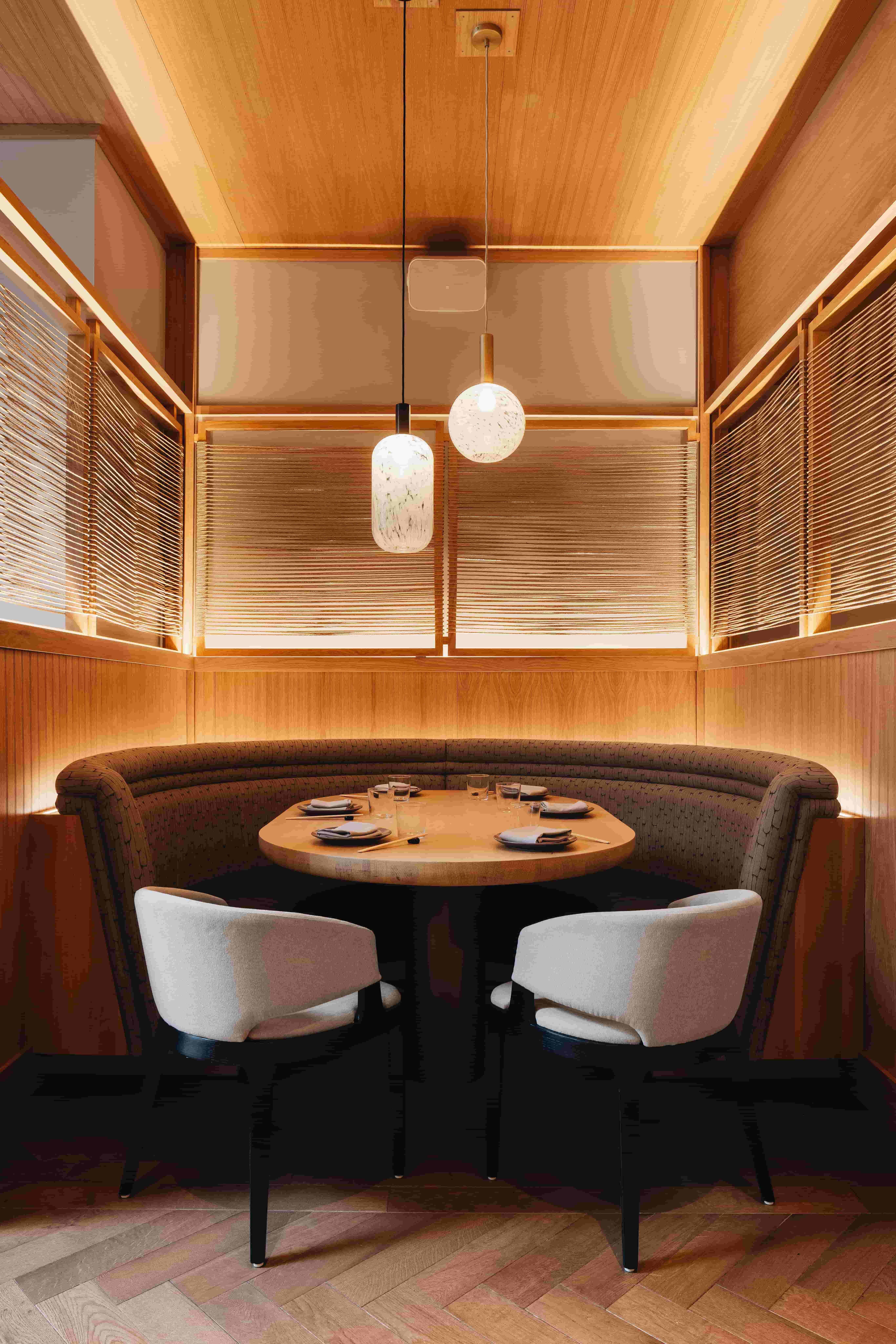
There’s a reason you instinctively gravitate toward the corner booth at a restaurant, prefer a desk positioned with a wall behind you, and why a bedroom feels wrong when the bed faces away from the door. These preferences are evolutionary, and understanding them might be the most immediately actionable biophilic design principle you can apply.

The Evolutionary Story
Picture this: 100,000 years ago, your ancestors sought shelter in a cave. The cave provided refuge: protection from predators, weather, and threats. But they didn’t retreat to the back of the cave. They positioned themselves near the entrance, where they could maintain a clear view of the savanna beyond. That view was their prospect: the ability to survey their surroundings, spot opportunities for food and other resources, and identify dangers before they arrived.
Often, a fire burned at the cave’s entrance. Warmth, light, and an additional layer of security.
This was how we survived, and our brains are still wired for it. We’re hardwired to seek spaces where we feel safe (refuge) while maintaining awareness of our environment (prospect). When a space satisfies both needs, we relax. When it doesn’t, we feel exposed, vulnerable, and uneasy, even if we can’t articulate why.
Why This Matters in Modern Interiors
That ancient cave-and-savanna configuration explains so much about what we instinctively love:
- Corner booths in restaurants
- Window seats on planes and trains
- Chairs positioned with a wall behind them
- Desks facing the door
- Cozy reading nooks with a view
- High-backed chairs that cradle us
These arrangements make us feel secure and in control, and when we feel secure, our stress levels drop. Our bodies relax. We’re more comfortable, more focused, more at ease.
Modern Applications: Room by Room
Living Rooms:
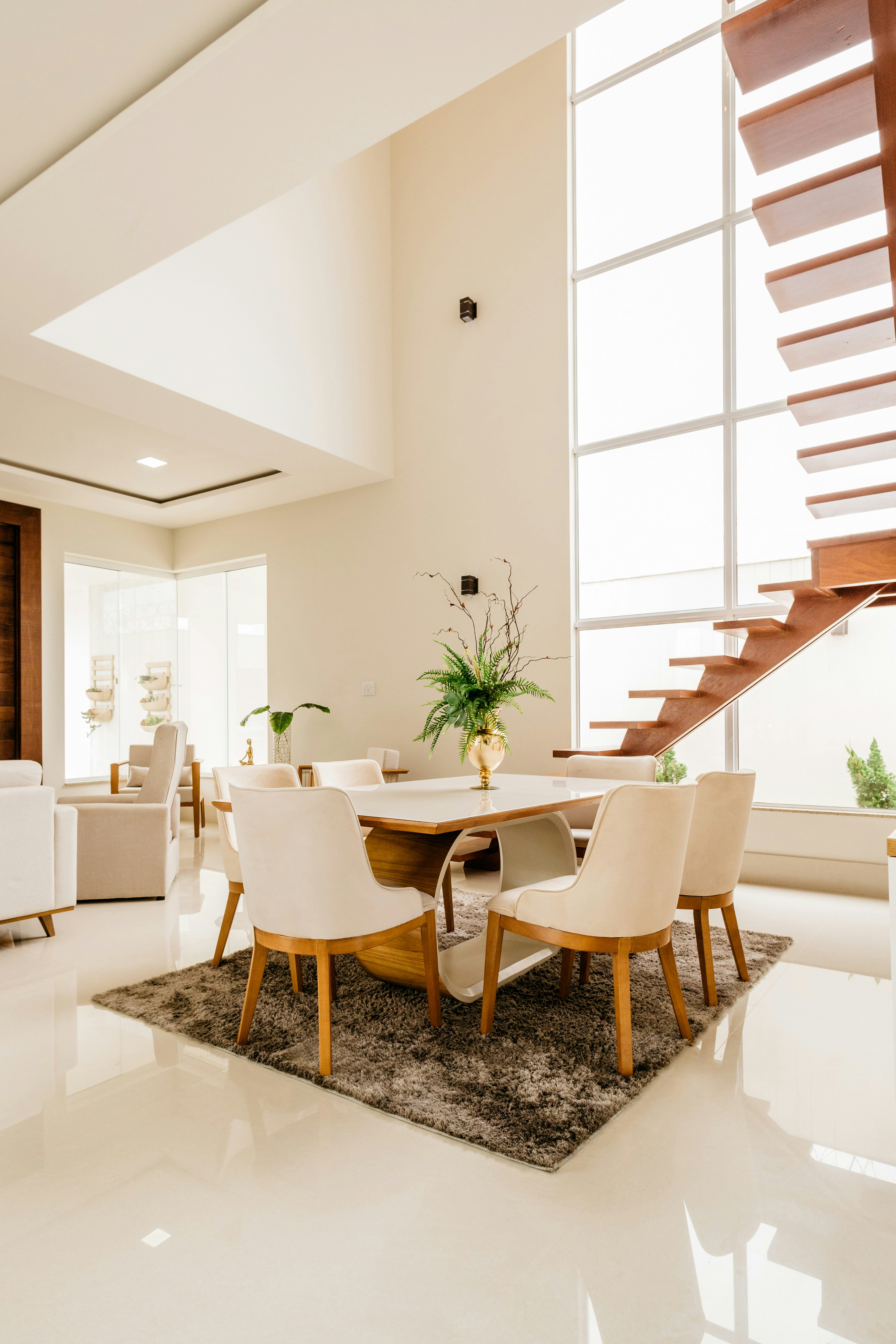
Position seating with solid walls or substantial furniture behind (refuge), facing toward the room’s entry and windows (prospect). A fireplace reinforces the refuge feeling. Avoid floating furniture in the middle of the room with no anchor point, as it creates subconscious unease.
Bedrooms:

Place the bed with the headboard against a wall, positioned so you can see the door from the bed without being directly in line with it. This satisfies both the need for protection (solid wall) and awareness (view of entry). Canopy beds, upholstered headboards, and alcove sleeping areas amplify the refuge quality.
Offices:
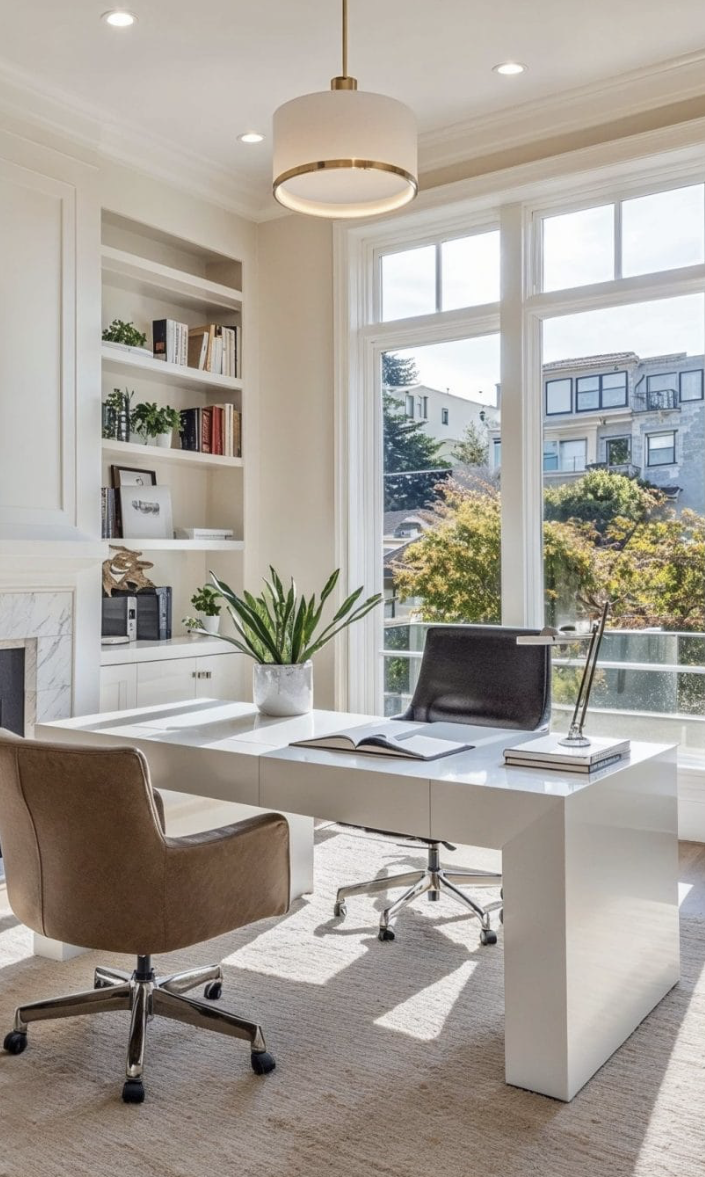
Position desks so you’re facing the door or have a clear view of the entry, with a wall behind you. Avoid sitting with your back to the door or in the center of a room with no anchor. If the space allows, incorporate a window view for prospect. Add task lighting and personal elements to enhance the refuge feeling.
Restaurants:
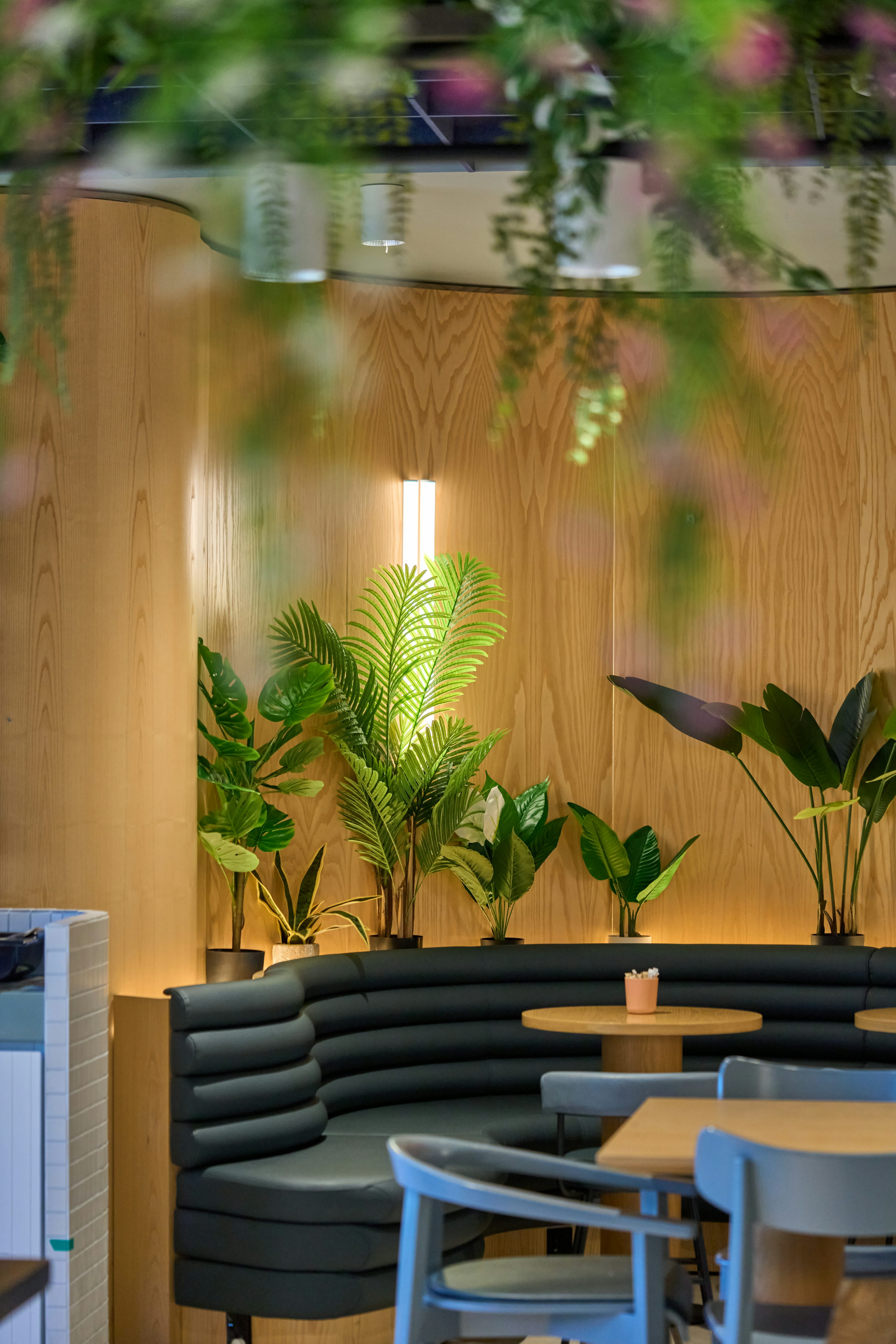
Corner booths are universally preferred because they maximize refuge (two walls) while maintaining prospect (view of the dining room). Bars often position seating so patrons can survey the establishment. Window seats offer the ultimate prospect—a view beyond the building itself.
The Before & After
The furniture is the same. The difference is biological comfort.
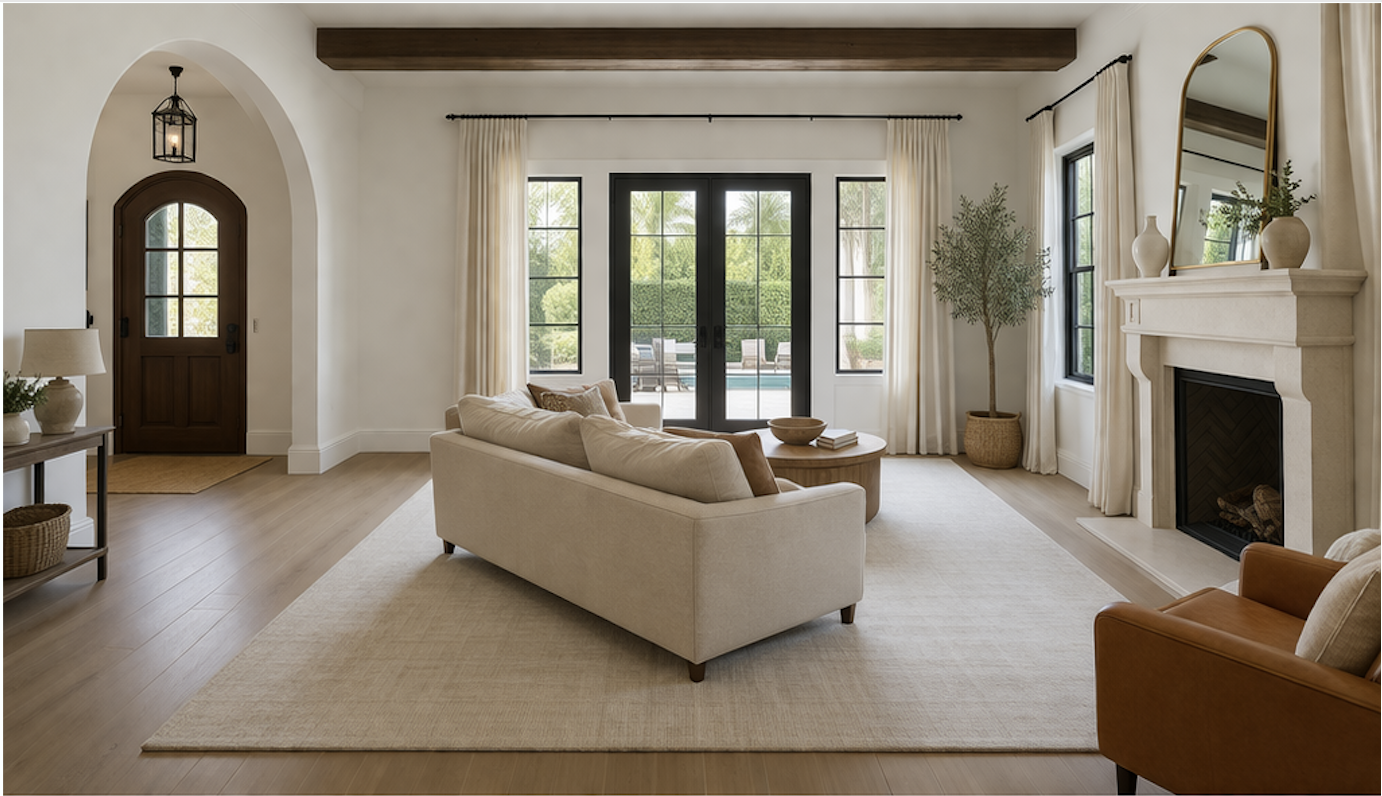
Poor Arrangement:
A living room with a sofa floating awkwardly in the center of the space, facing away from the entry. The seating arrangement creates no clear sightline to the door or windows, leaving the space feeling exposed and disconnected.
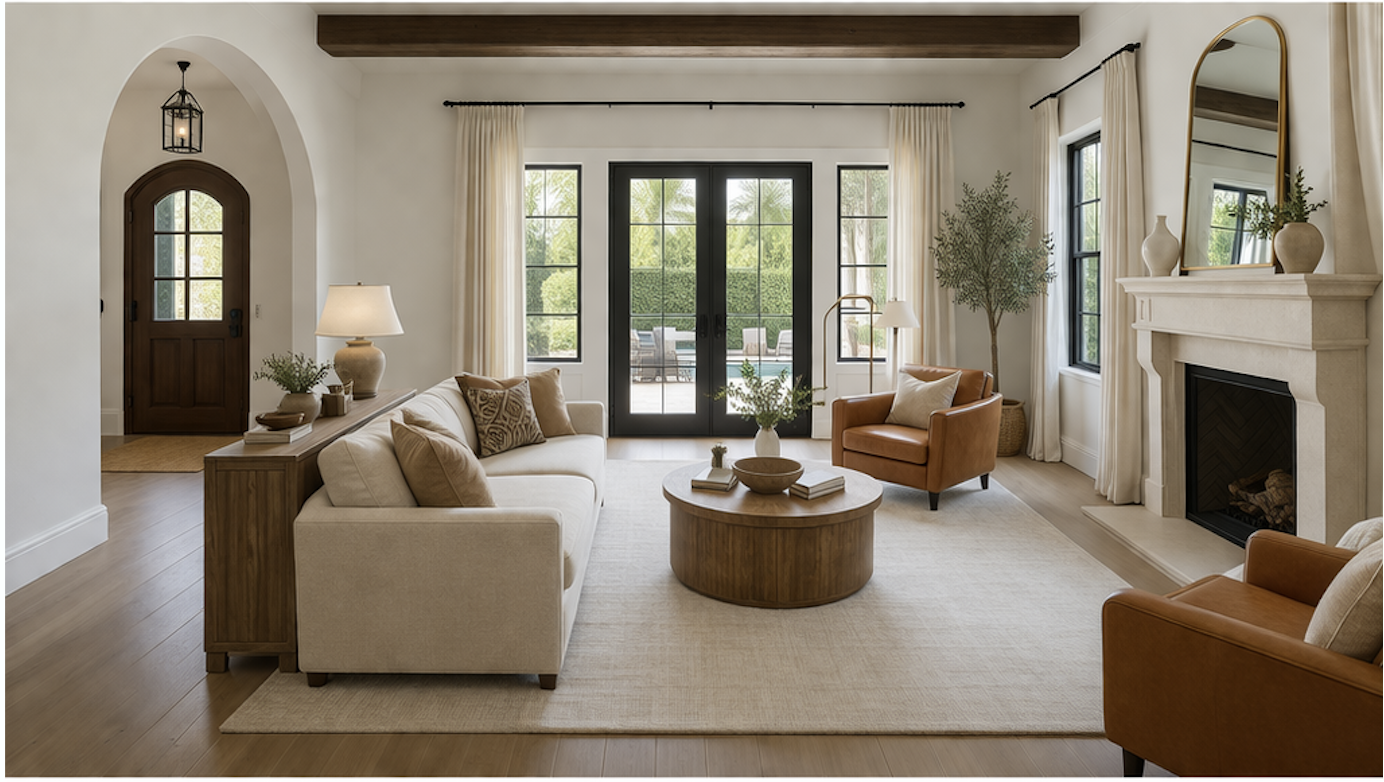
Prospect & Refuge Applied:
The same living room with the sofa anchored against a wall or grounded by a console table, facing both the entry and the windows. The seating arrangement provides clear sightlines to the door and outdoor view, while maintaining a solid backing for a sense of protection and comfort.
The Science in Design Certification program is for designers and architects who want to make a lasting impact on their clients’ lives beyond aesthetics alone through the application of biophilic principles like prospect and refuge.
Differentiate yourself and elevate your value proposition while gaining 13 ICEC-approved credits. Get certified now.
Fractal Patterns & Stress Reduction
If you’ve ever stared at a tree canopy, ocean waves, or flickering flames and felt your mind settle, you’ve experienced fractal fluency. Fractals are nature’s repeating visual language and your brain speaks it fluently. Understanding fractals might be one of the most powerful tools in your biophilic design toolkit, because the research is undeniable: fractal patterns reduce stress by up to 60%.
What Are Fractals?

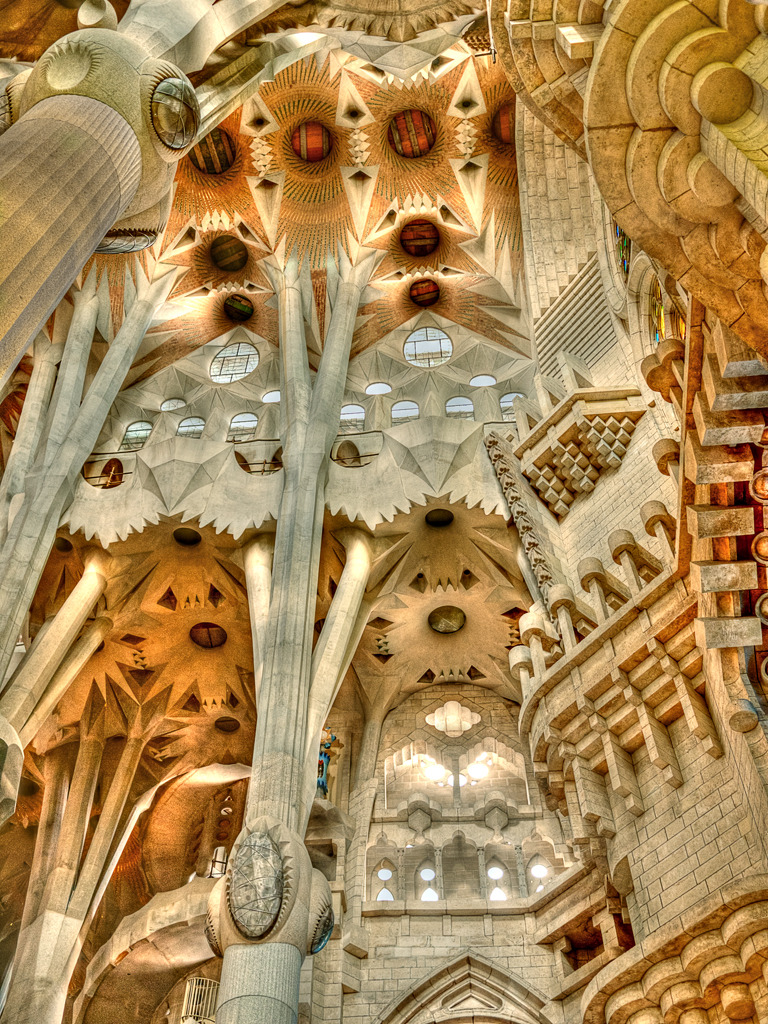
Fractals are self-similar patterns that repeat at different scales. Zoom in or out, and you see the same essential structure echoing at every level.
Look at a tree: large branches split into smaller branches, which split into even smaller branches, which split into twigs. Each level mirrors the one before it. The same pattern shows up in leaf veins, river networks, lightning, snowflakes, romanesco broccoli, coastlines, mountain ranges, clouds, and even the human circulatory system.
.
Dr. Richard Taylor, the leading researcher in fractal patterns at the University of Oregon and faculty member at Science in Design, puts it simply: “Fractals are the basic building blocks of nature.” And even more poetically: “Fractals are the fingerprint of nature.”
Why Fractals Matter for Interior Design
For 99.99% of human history, our visual systems evolved immersed in fractal environments. Our brains became “fractal fluent,” meaning we process these patterns effortlessly, often unconsciously. When we encounter fractals, our visual system recognizes something familiar that we’re hardwired to understand.
But in modern built environments filled with straight lines, right angles, flat surfaces, and geometric repetition, our brains have to work harder. Non-fractal environments create visual stress, even if we’re not consciously aware of it. It’s like being in a place where no one speaks your language.
When you reintroduce fractals into interiors, you’re giving the brain what it expects, what it’s designed to process, which is why they have such a great ability to reduce stress.
The Measured Benefits
Research on fractal patterns shows extraordinary results:
- Up to 60% reduction in physiological stress
- Improved cognitive function and focus
- Enhanced creativity and problem-solving abilities
- Increased positive emotions and sense of well-being
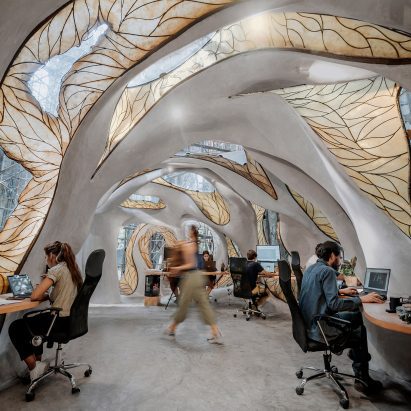
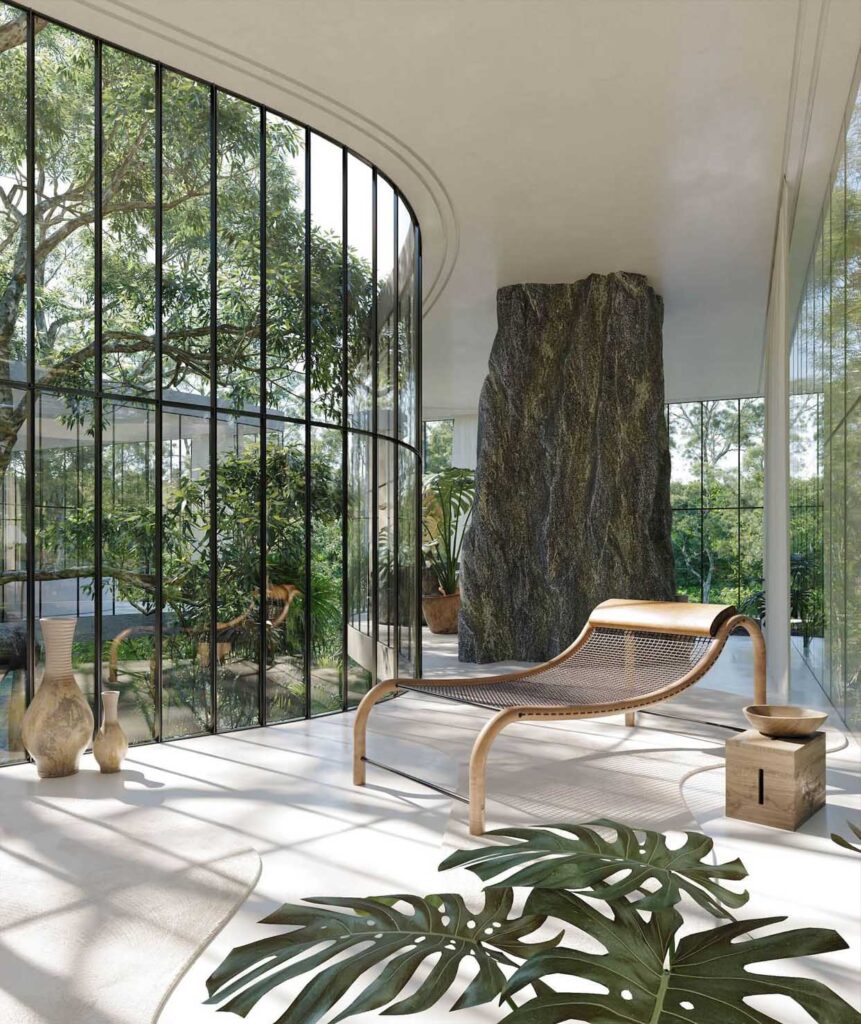
Dr. Richard Taylor’s
Fractal-Focused Research
Dr. Richard Taylor is a professor of Physics, Psychology, and Art at the University of Oregon and the world’s leading expert on fractal patterns and their impact on human perception. His work has been featured in The New York Times, Scientific American, Time, The New Yorker, and New Scientist. He’s presented at the Nobel Foundation and the Guggenheim Museum. And we’re very lucky to have him as a faculty member at Science in Design.
Taylor’s research reveals that fractal patterns trigger a physiological relaxation response. Eye-tracking studies show that when we view fractals, our eye movements follow the pattern’s structure naturally and efficiently. When we view non-fractal patterns, our eyes search erratically, creating subtle but measurable stress.
His work has been instrumental in translating fractal science into practical design applications, proving that we can bring nature’s stress-reducing patterns into built environments intentionally.
Applying Fractals in Interior Design
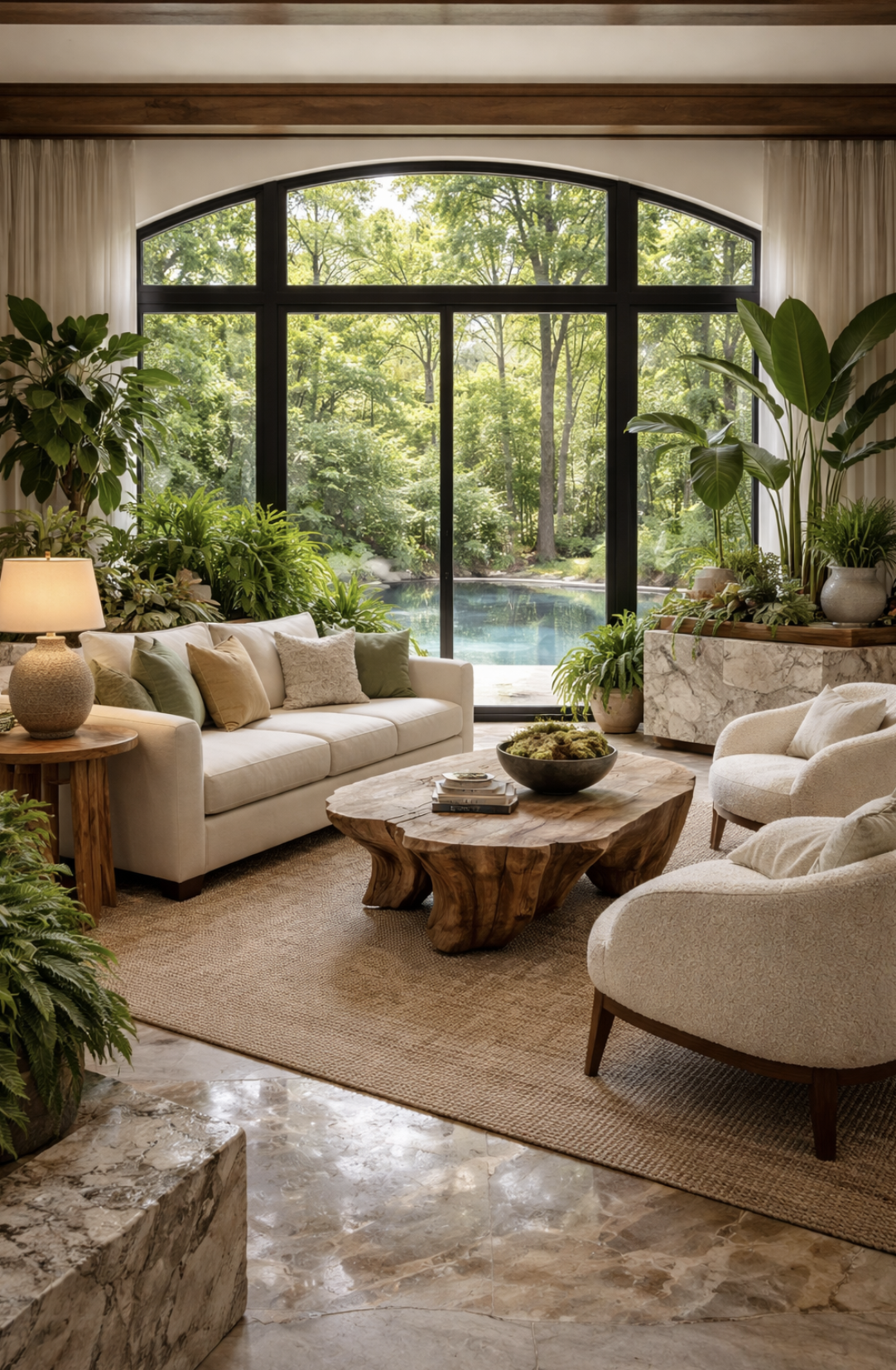
Natural Sources:
- Views of tree canopies through windows
- Layered plant arrangements (large plants, medium, small, ground cover)
- Natural wood grain in furniture and flooring
- Stone with natural veining and patterns
- Water ripples and reflections
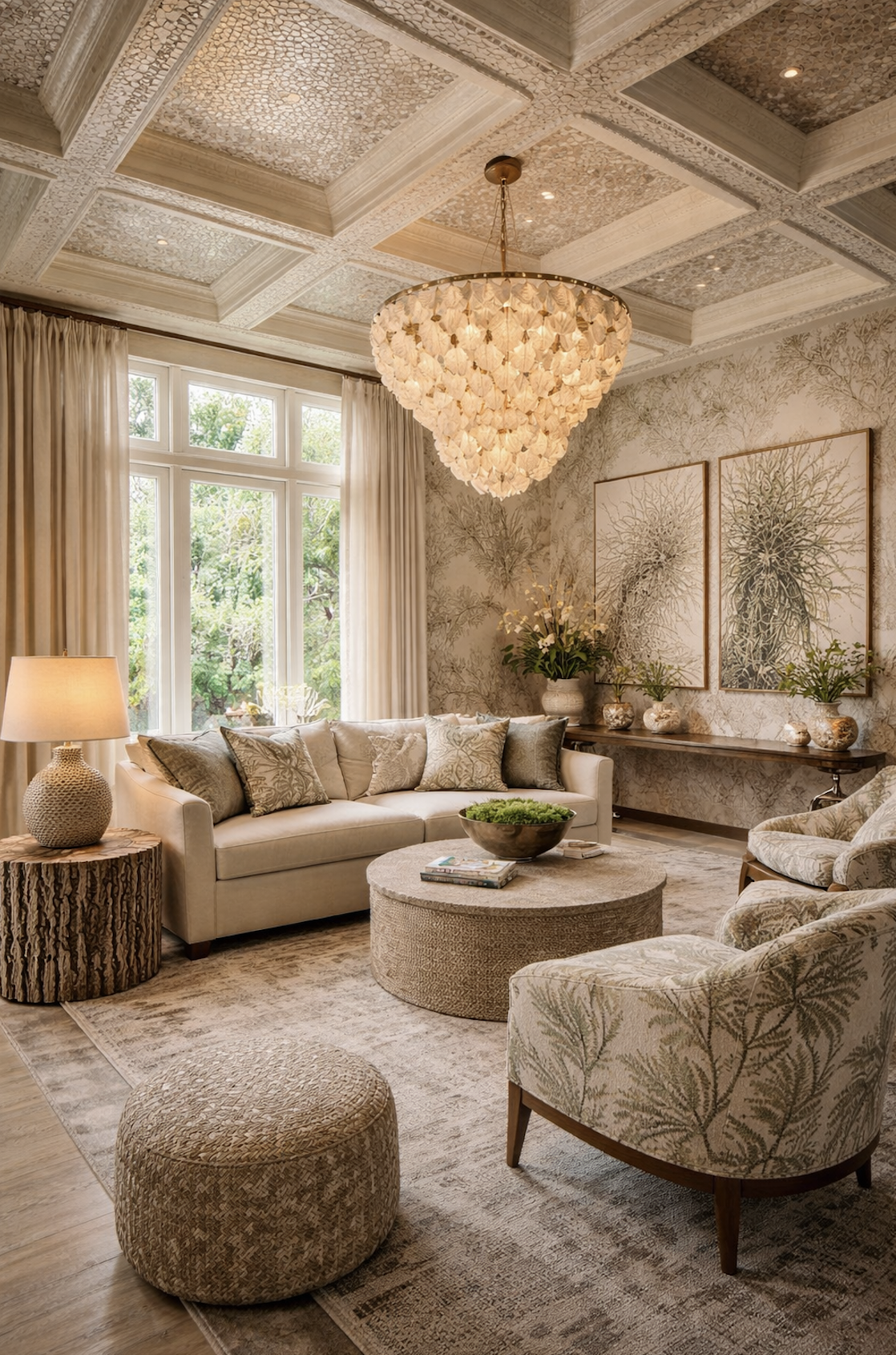
Design Applications:
- Fractal-patterned wallcoverings and textiles
- Botanical motifs that echo branching structures
- Lighting fixtures with organic, repeating forms
- Architectural details like coffered ceilings, decorative moldings with repeating scales
- Artwork featuring natural fractal imagery
The Key Principle:
As Dr. Taylor emphasizes, “We cannot copy nature directly; we must adapt fractal inspiration to fit its new environment.” You can’t just transplant tree branches into an airport and call it done. The fractal patterns must be translated thoughtfully into the context of the space, the function, and the materials available.
When appropriately applied, the impact is profound. Fractal patterns go beyond decoration to restoration.
Get certified now to learn more about biophilic design and the power of fractals from experts like Dr. Richard Taylor.
Biophilic Design Applications by Space Type
Biophilic design isn’t one-size-fits-all. How you apply these principles depends on the space, its function, and who uses it. Here’s how biophilic interior design translates across residential, commercial, and healthcare environments, with measurable outcomes for each.
Residential Spaces: Creating Homes That Heal
Your clients spend more time at home than anywhere else. Biophilic design transforms these spaces from merely functional to genuinely restorative. Below are some core strategies for implementing biophilic design into your practice and projects.
- Maximize Natural Light: Prioritize window placement, use sheer treatments that filter rather than block daylight, and use mirrors strategically to reflect light deeper into a space.
- Integrate Indoor Plants: Layer plant heights and textures to create depth and abundance, choosing species suited to each room’s light conditions. Use them to soften hard edges and fill visual gaps that would otherwise feel stark.
- Specify Natural Materials: Wood, stone, natural fiber, leather, clay, and ceramics carry a warmth that artificial materials can’t replicate. They communicate authenticity to the nervous system before a client can articulate why a space feels right.
- Frame Views to Nature: Orient seating toward windows and gardens, use large-scale glazing wherever feasible, and consider green walls or atriums where direct outdoor views aren’t available. The brain responds to the prospect of nature even when it’s framed through glass.
- Incorporate Water Features: Tabletop fountains, outdoor water features visible from inside, and aquariums simultaneously engage sight, sound, and movement in ways that measurably reduce stress and support calm.
- Choose Organic Furniture Forms: Curved sofas, live-edge tables, and furniture that echoes natural geometry register as familiar and safe to the human brain, a welcome contrast to the rigid forms that dominate most built environments.
- Apply Nature-Inspired Color Palettes: Earth tones, greens, blues, and warm neutrals are the colors the human nervous system recognizes as safe and restorative long before conscious thought catches up.
Layer Fractal Patterns: Botanical prints, wood grain, stone veining, and nature-inspired textiles introduce the self-repeating patterns our brains are wired to find comforting. Layering them throughout a space creates the kind of rich, coherent environment humans have sought out for millennia.
Room-by-Room Strategies:

Living Rooms: Position seating to maximize natural light and views. Incorporate substantial plants. Use natural wood furniture and stone accents. Add a water feature or fireplace as a focal point.
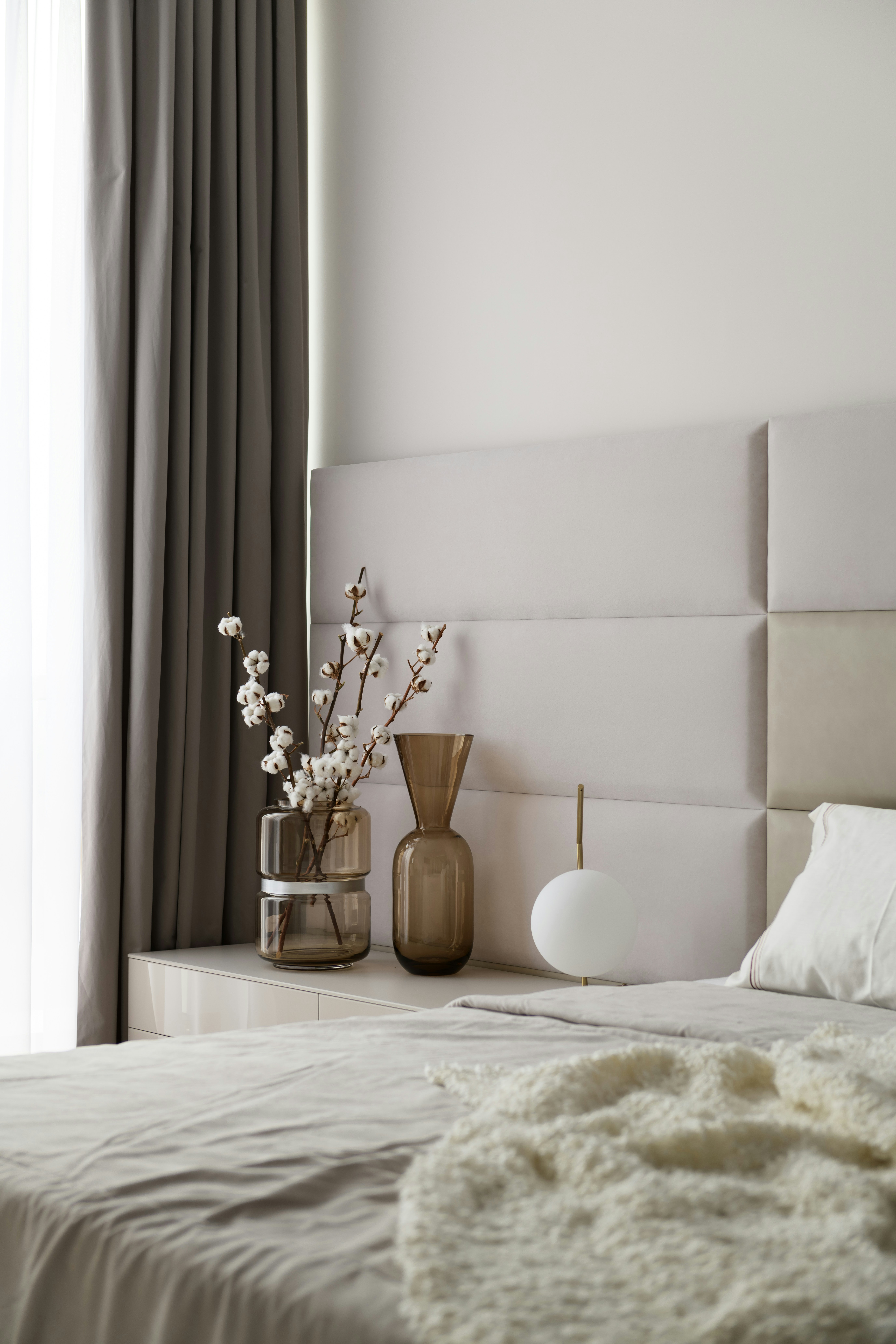
Bedrooms: Ensure views of nature or sky from the bed. Use natural fiber bedding and window treatments. Incorporate soft, organic shapes. Keep lighting warm and dimmable to mimic natural light cycles.
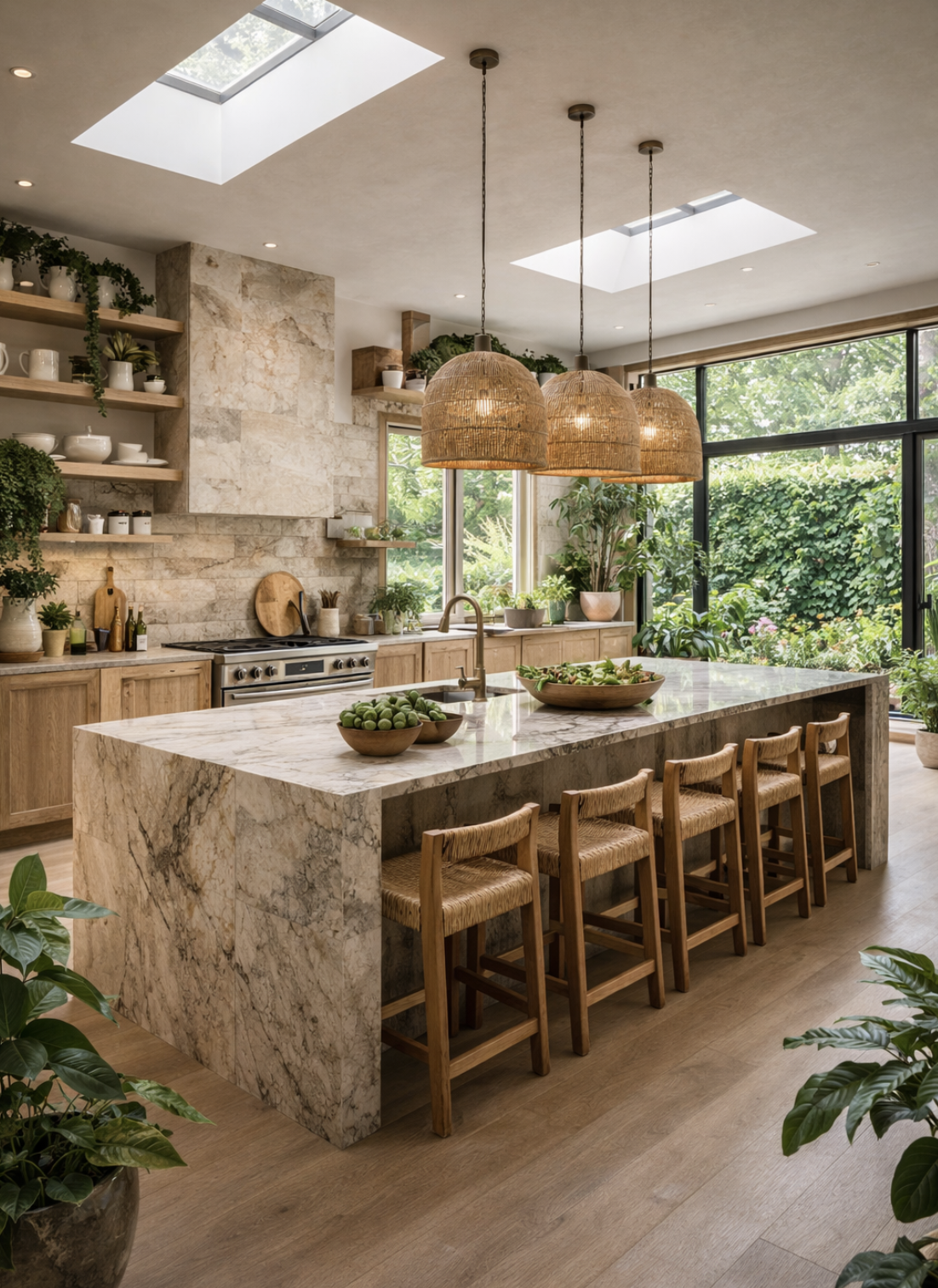
Kitchens: Maximize window space above sinks and prep areas. Use natural stone or wood countertops. Incorporate herb gardens or potted plants. Choose warm, natural materials for cabinetry.
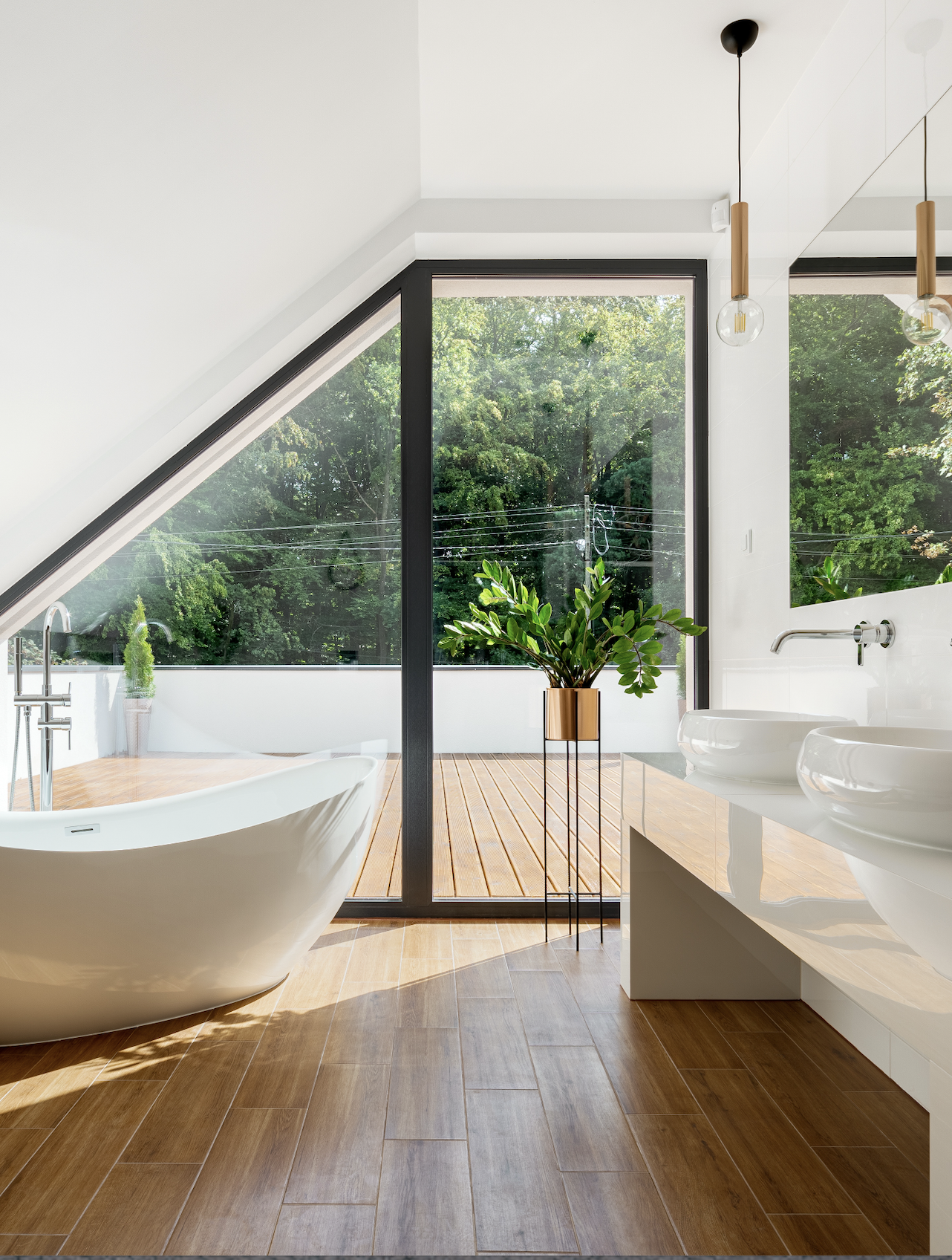
Bathrooms: Bring in natural light wherever possible. Use stone, wood, or natural tile. Add plants that thrive in humidity. Consider rainfall showerheads and deep soaking tubs that evoke natural water experiences.
Download our Biophilic Design Implementation Guide and never miss an opportunity to incorporate biophilic design principles into your client projects again.
Commercial Spaces:
The Business Case for Biophilic Design
The data is compelling. Biophilic design in commercial environments delivers measurable ROI:
- 15% increase in productivity
- 6% increase in creativity
- 15% increase in employee well-being
- Improved employee retention
- Reduced sick days and absenteeism
These aren’t marginal gains. For businesses, these numbers translate directly to the bottom line.
Key Commercial Strategies:
Living Walls & Green Installations: Vertical gardens in lobbies, atriums, and common areas create dramatic visual impact while improving air quality and reducing stress.
Natural Light Optimization: Open floor plans with access to daylight, glass-walled offices and conference rooms, light wells and atriums, circadian lighting systems that shift color temperature throughout the day.
Views to Nature: Position workstations near windows, create rooftop gardens or terraces, use interior courtyards and atriums, incorporate nature imagery where actual views aren’t possible.
Natural Materials: Wood flooring and furniture, exposed brick or stone, natural fiber acoustic panels, biomorphic furniture shapes that break the monotony of geometric office furniture.
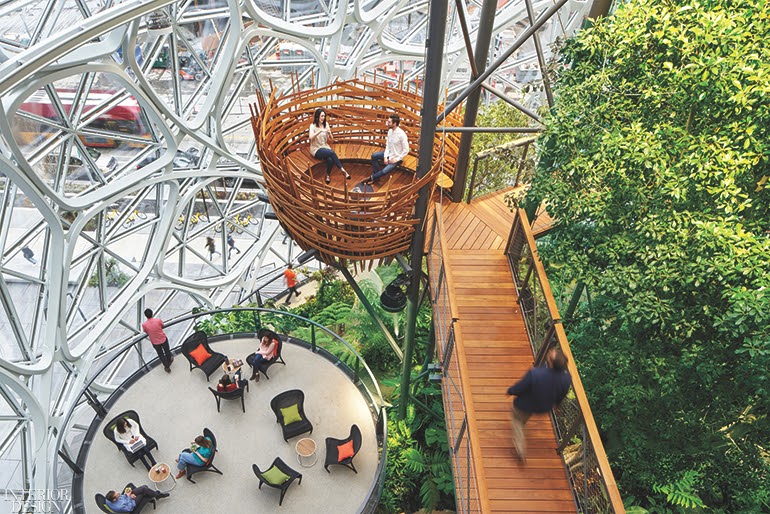
High Profile Commercial Case Studies
Amazon’s Seattle headquarters features nest-like conference rooms suspended from the ceiling and houses over 390 species of plants. Microsoft is building conference rooms in treetops. Google prioritizes biophilic design across its campuses.
These companies aren’t doing this because it looks nice. They’re doing it because the research shows it makes their employees healthier, more creative, more productive, and less likely to leave.
If these top-ranking Fortune 500 companies are implementing biophilic design, then surely there’s reason to implement these design principles in our own commercial design projects.
Healthcare Environments:
Where Biophilic Design Expedites Recovery
Healthcare leads the biophilic design movement for one reason: patient outcomes are measurable, and the results are undeniable.
The Landmark Study:
In 1984, environmental psychologist Roger Ulrich published groundbreaking research comparing surgical recovery rates of patients in rooms with views of trees versus those with views of brick walls. Patients with tree views:
- Recovered faster
- Required less pain medication
- Had fewer post-surgical complications
- Were discharged earlier
This single study changed how some hospitals approach design.
Why Healthcare Embraced Biophilic Design
When patients heal faster, hospitals save money and improve outcomes. When staff experiences less stress, they provide better care and stay in their positions longer.
Biophilic design is a proven intervention that works.
Key applications include patient room views to nature, interior gardens and atriums, natural materials in waiting areas, water features, abundant natural light, and nature-inspired artwork throughout facilities.
As we noted earlier: if the medical industry uses biophilic design to heal their patients, shouldn’t interior designers be using it for their clients?
Getting Started: Practical Implementation
Biophilic design doesn’t require a complete renovation or an unlimited budget. Some of the most impactful strategies cost nothing at all. Here’s how to start implementing these principles today, whether you’re working on a high-end project or a modest refresh.
Quick Wins: Start Today
- Maximize Natural Light ($0-$500)
Remove heavy window treatments or replace them with sheer options. Rearrange furniture to take advantage of existing daylight. Add mirrors strategically to reflect light deeper into rooms. Clean windows inside and out; you’d be surprised how much light is blocked by grime. - Add Living Plants ($100-$300)
Start with easy-care varieties suited to your light conditions: pothos, snake plants, ZZ plants, peace lilies, and alike. Layer heights to include floor plants, tabletop plants, and hanging plants. Group them for visual impact. Note that real plants provide far more measurable health benefits than fake plants. - Integrate Natural Materials (varies)
Swap out synthetic textiles for cotton, linen, wool, or jute. Add wood bowls, cutting boards, or decorative objects. Introduce stone coasters, vases, or accents. Use natural fiber rugs. Choose furniture with visible wood grain. - Create a Prospect/Refuge Moment ($0-$1,000)
Rearrange existing furniture to honor prospect and refuge principles; this often costs nothing. Create a reading nook with a chair positioned to have a view (prospect) with a wall or substantial furniture behind (refuge). Add a floor lamp and side table, and you’ve created a space people will gravitate toward instinctively.
5. Use Fractal Patterns ($200-$1,000)
Add botanical or nature-inspired artwork. Choose textiles with organic, repeating patterns. Specify wallpaper with fractal designs for an accent wall. Layer textures that echo natural complexity like woven baskets, carved wood, natural stone.
Budget-Friendly Biophilic Design
Here’s the truth: intelligence matters more than budget when implementing biophilic design.
Many Strategies Cost Nothing:
Rearranging furniture to maximize natural light and views? Free. Applying prospect and refuge principles? Free. Opening blinds during the day? Free. Positioning seating to face windows or gardens? Free.
Plants Are Affordable and High-Impact:
A $20 pothos can grow to fill an entire corner. A $15 snake plant can last for years with minimal care. Local plant swaps and propagation from cuttings cost nothing.
Natural Materials Fit Any Budget:
You don’t need marble countertops. A wooden cutting board, a cotton throw, a jute rug, or a linen pillow is accessible to nearly any budget and delivers the same biological signal: connection to nature.
The Key is Intention:
Apply biophilic principles thoughtfully, regardless of budget. A well-arranged space with abundant natural light, a few thriving plants, and carefully chosen natural materials will outperform an expensive space that ignores these principles entirely.
Common Mistakes to Avoid
1. Using Fake Plants
Artificial plants provide zero biological benefit. Your brain knows the difference, even if you think it looks “realistic.” If maintenance is a concern, choose low-maintenance real plants instead.
2. Neglecting Maintenance
A dying, brown, wilted plant creates the opposite of the intended effect. It signals decay, not vitality. If you or your client can’t commit to plant care, use fewer plants and choose hardy varieties, or focus on other biophilic strategies.
3. Doing Too Much at Once
Biophilic design should feel organic, not overwhelming. A space crammed with plants, nature prints, wood, stone, and water features all at once can feel chaotic. Layer thoughtfully. Let the space breathe.
4. Ignoring Local Climate and Ecology
Biophilic design works best when it reflects the local environment. Using desert plants in a humid climate or tropical materials in a cold region creates disconnect, not connection. Honor the ecology around you.
5. Thinking Biophilia = Plants
Plants are wonderful, but biophilic design is so much more. Natural light, views, water, fractal patterns, natural materials, prospect and refuge, and organic all matter. Don’t reduce the entire concept to “add some greenery,” as you’ll be selling yourself and your clients short on what’s possible.
Designer Success Stories & Community
From Intuition to Authority:
Certified Designers Leading the Movement
For years, designers have known that a well-designed space makes people feel better. The Science in Design® Certification gave these designers something more powerful: the language, the science, and the confidence to prove it. Below are testimonials from current students and Science in Design Certified designers about what this education is doing for their approach to design and project outcomes.


“I am already through the first module of the course, and it is incredible. I especially love the environmental psychology focus, as that was exactly what first drew me to this subject back in design school. It is so refreshing to finally see these concepts being structured into a formal program for our industry. Thank you for taking the reins and developing this—it is exactly what the design world needs.”
John has always believed that a well-designed space does more than look good; it feels good. Design can calm, restore, and inspire. That conviction drew him to environmental psychology in design school, and it’s what makes biophilic design such a natural fit for his Atlanta-based practice. His process begins with deep listening, allowing him to understand where clients seek refuge and what makes their days feel chaotic. He’s then able to translate their answers into spaces that are, as he puts it, “as smart and strategic as they are soulful and serene.”

Kate has translated her certification into a richer client experience, one where design choices come with clear, science-backed rationale. Her clients now love their spaces and understand why they make them feel the way they do. That kind of clarity builds the kind of trust that generates referrals for years to come.


“Being part of this community feels like standing at the forefront of meaningful, evidence-based design—design that truly enhances people’s lives. Every lecture, every dataset, every visual reinforced what I’ve always believed: that design is not just about beauty, but about well-being.”
Patricia’s background spans interior design, graphic design, fine art, and 25 years of hospitality and corporate experience: a breadth that gives her an unusually holistic lens on how spaces affect people. She’s always believed that pattern, color, and repetition have the power to create joy, harmony, and a sense of sanctuary. The Science in Design® Certification gave that intuition a scientific foundation, connecting what she’s observed across decades of practice to the research now documenting why it works.
Ready to join John, Kate, Patricia, and the 200+ other designers stepping into the future of design? Register for the Science in Design Certification program here.
Join a Community of 200+ Certified Designers

The Science in Design® community is a growing network of designers and architects who are leading the biophilic design movement in their local markets and across the country.
When you get certified, you join a peer community of early adopters who are actively repositioning their practices around science, health, and well-being.
What the Community Offers:
- The Science in Design® LinkedIn Community, a dedicated space to share ideas, discuss local market trends, and connect with fellow practitioners advancing health-based design
- Collaboration opportunities on webinars, market presentations, and local events
- Thought leadership opportunities alongside Science in Design® founder Mike Peterson
- Ongoing education through the Science in Design® webinar series, featuring academics and design experts from leading institutions
The movement is growing. Certified designers are presenting at design centers, hosting webinars, leading local workshops, and showing up as the authority in their markets. The question isn’t whether biophilic design is the future of the industry; it’s whether you’ll be one of the designers leading it.
Resources & Next Steps
Everything You Need to Start Designing with Science
Whether you’re just beginning to explore biophilic design or ready to build a fully science-backed practice, Science in Design® has the tools to meet you where you are.
Free Resources
These resources are yours to use today; no certification required.
Download: Biophilic Design Implementation Guide Your practical, room-by-room companion for applying biophilic design principles to any project, at any budget. Includes research-backed strategies, material recommendations, and
implementation tips you can put to work immediately.
Download the Free Guide →
Watch: Science in Design® Webinar Series Substantive community discussions around the core concepts behind biophilic design and neuroaesthetics, featuring Mike Peterson, Science in Design® faculty members, brand partners, and Science in Design Certified designers.
Download: Client Conversation Guide A resource for designers implementing biophilic design elements and neuroaesthetic principles into their work. You get word-for-word talking points for 6 essential scenarios, from initial consultations to budget objections.
Everything You Need to Start Designing with Science
For designers ready to lead the industry into its next frontier, the Science in Design® Certification is the only program of its kind: a research-backed, academically grounded curriculum that translates the science of neuroaesthetics and biophilia into a complete business and design framework.
What You’ll Learn:
This 22-class program covers everything from the evolutionary science behind why humans respond to beauty, to the practical design strategies that put that science to work for your clients and your business.
- Master all 14 Patterns of Biophilic Design in depth, with real-world application strategies for residential, commercial, and healthcare environments
- Understand the principles of neuroaesthetics: how the brain processes beauty, why certain environments reduce stress, and what science now knows about design and health
- Apply fractal fluency, prospect and refuge, biomorphic forms, and other evidence-based design tools across every project type
- Develop the language to explain your design decisions to clients with confidence, credibility, and clarity
- Market your expertise: learn how to integrate science into your branding, website, and client conversations to elevate trust and command stronger fees
- Connect with a community of early adopters leading a global movement in health-based design
Program Details:
- 22 self-paced classes | Complete on your schedule, with up to a year to finish
- 13 IDCEC-approved continuing education credits
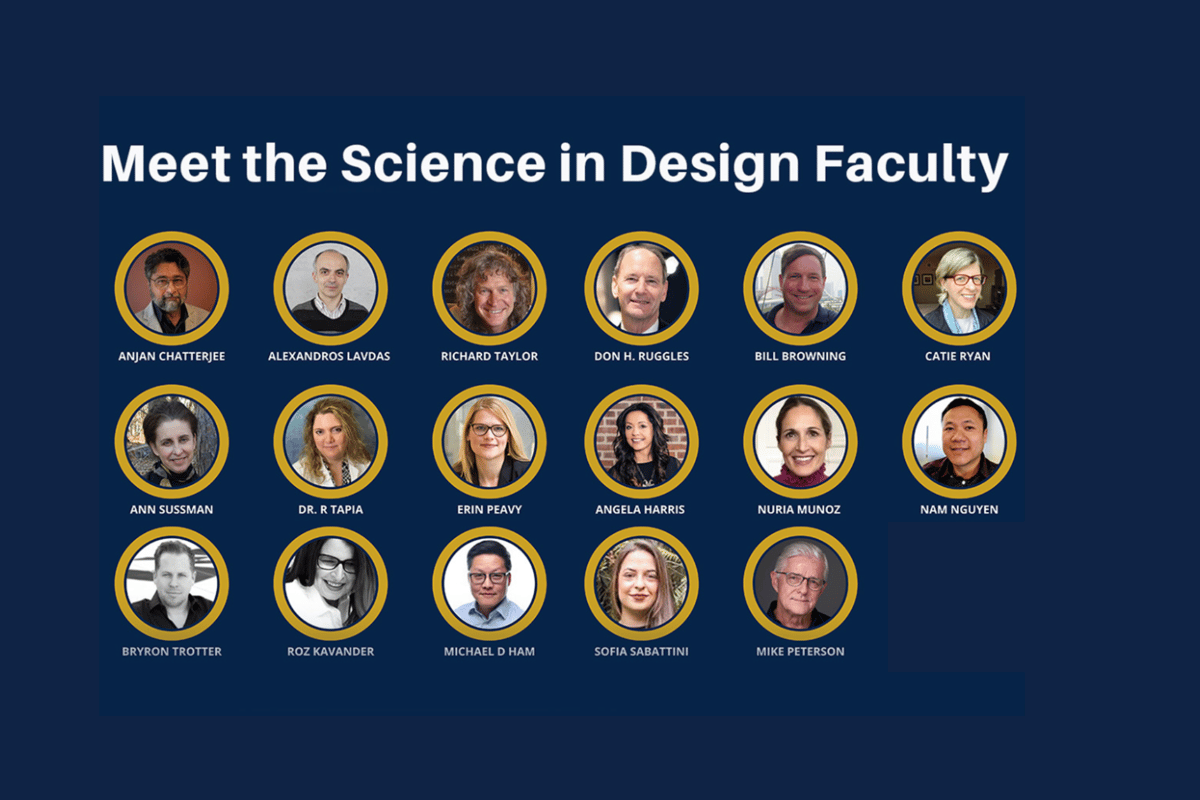
- Faculty from Harvard University, the University of Pennsylvania, the University of Oregon, and Terrapin Bright Green, among others
- Join 200+ certified designers already applying these principles in their practices
- BONUS: All graduates receive a free 30-minute coaching session with Business Coach Nancy Quinn, focused on pricing, client attraction, and profitable growth
- Investment: $895
Frequently Asked Questions
Not at all. Biophilic design is as relevant in commercial and healthcare environments as it is in residential spaces. The data from commercial settings is compelling: biophilic offices report a 15% increase in productivity, a 6% increase in creativity, and a 15% improvement in employee well-being. In healthcare, outcomes like faster surgical recovery times and reduced pain medication use are directly attributed to biophilic design interventions. The principles apply universally; the application simply adapts to the function of the space and the needs of its occupants.
What if I have a small budget? Some of the most effective biophilic design strategies cost nothing. Rearranging furniture to honor prospect and refuge principles, maximizing existing natural light, and orienting seating toward windows or garden views are free. A $20 pothos can fill a corner and deliver genuine health benefits. A cotton throw, a jute rug, or a wooden object on a shelf signals connection to nature at any price point. The differentiator in biophilic design isn’t budget; it’s intention. A thoughtfully designed space that applies these principles will outperform an expensive one that ignores them.
Do I need real plants? This depends on your goals. While real plants offer health benefits faux plants cannot, like their innate vitality and gentle movement, fake plants have come a long way in adding aesthetic beauty to a space. Both have their place when it comes to neuroaesthetics and biophilic design.
Can biophilic design work in urban environments with limited nature views?Absolutely, and this is where biophilic design becomes most critical. When direct access to nature is limited, interior design is the only delivery system available. Urban environments make the principles of biophilic design more important, not less. Biomimicry—the use of nature-inspired patterns, fractal designs, botanical motifs, organic forms, and natural materials—delivers many of the same neurological benefits as direct nature contact. Living walls, interior atriums, water features, and carefully specified materials can transform an urban interior into a genuinely restorative environment, even without a tree in sight.
How is biophilic design different from simply “bringing the outdoors in”? “Bringing the outdoors in” is a starting point, not a philosophy. True biophilic design is a research-backed framework grounded in evolutionary biology, neuroscience, and decades of clinical research. It’s not about adding plants or choosing a nature-inspired color palette. It’s about understanding why humans respond to certain environments at a biological level, and designing with that knowledge. Prospect and refuge, fractal patterning, non-rhythmic sensory stimuli, thermal variability, and connection with natural systems are all part of the biophilic design toolkit, and none of them require a single houseplant. The distinction matters because it changes your value proposition. You’re not decorating; you’re designing for human health.
What’s the ROI of biophilic design? The return on biophilic design is measurable at every scale. For individual clients, the benefits include reduced stress, lower blood pressure, improved sleep, better cognitive function, and enhanced emotional well-being. These are outcomes that science can now document and verify. For commercial clients, the numbers are direct: a 15% increase in productivity, a 6% increase in creativity, measurable reductions in employee sick days, and improved retention. For healthcare clients, faster patient recovery and reduced pharmaceutical costs are the documented results. For your business, the ROI is equally compelling. Designers who can articulate the science behind their work command greater client trust, differentiate themselves in a crowded market, justify stronger fees, and attract clients who are actively seeking health-focused design. The Science in Design® Certification gives you both the knowledge and the language to capture that value.