
Spatial Design & Neuroscience: How Space Affects the Brain
This is the power of the subliminal mind, and it’s always working in the spaces you design. In those first 3-4 seconds when someone walks into a room you’ve created, their unconscious brain is making decisions: registering safety or threat, natural patterns or foreign environments. The question every designer must ask: Are you designing for the brain you can’t see?
Our spaces trigger measurable biological responses: lowered heart rate, reduced blood pressure, even cellular changes in our skin. Understanding the neuroscience behind spatial design transforms what’s possible.
Designing for the Brain You Can’t See
Eric Kandel, Nobel Prize winner in physiology, discovered something remarkable: 95% of brain activity is beyond our conscious awareness. Most decisions we make happen beneath the surface of awareness.
In this resource, we’ll discuss how the unconscious mind is fluent in fractals, responsive to natural light patterns, and attuned to proportions found in nature. When these elements are present, the brain relaxes. When absent, we work harder just to process our surroundings.
This subliminal brain makes judgments about your work before clients consciously register what they’re seeing. In those first moments, what do you want them to feel?
The Biology Behind Our Design Preferences
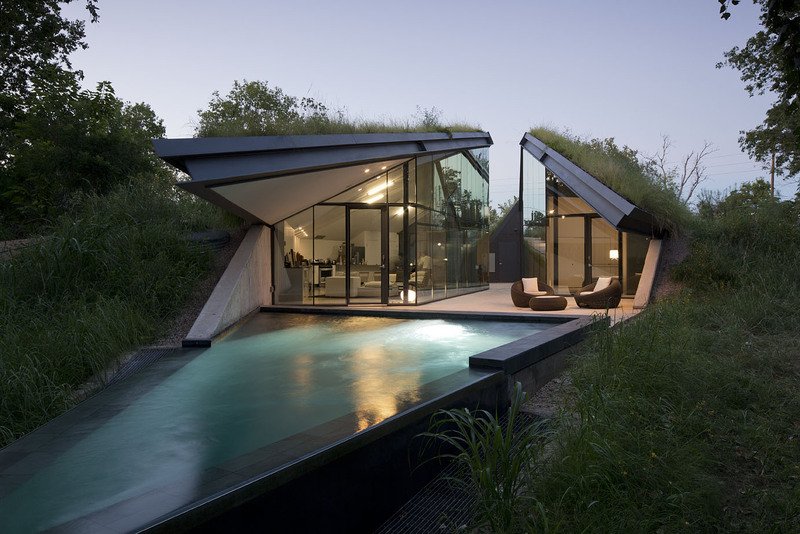
Our design preferences aren’t random. They’re biological. Humans evolved over millions of years in natural environments. We’ve existed less than 0.01% of our species’ history in modern surroundings. As Susan Magsamen notes, humans spent 99.99% of our evolutionary timeline living in nature.
Nigel Nicholson puts it perfectly: “You can take the person out of the Stone Age, but you can’t take the Stone Age out of the person.” Our brains are still wired for the environments in which we evolved. Anne Sussman, Professor of Cognitive Architecture, frames this as the new direction for design: “Our brain is an artifact of millions of years of evolution.”
These natural patterns aren’t aesthetic preferences; they’re what we’re biologically designed to thrive within and what our body and mind crave. To learn more about our fascinating natural affinity for nature, visit our page on biophilia.
What Happens in Your Body When You See Beauty
Since the 1990s, neuroscientists have been measuring what happens when we experience beauty. This convergence of neuroscience and aesthetics, called neuroaesthetics, reveals that beauty creates measurable biological responses:
- Cardiovascular changes: Heart rate lowers, blood pressure decreases
- Neurochemistry shifts: Serotonin generation increases
- Cellular responses: Galvanic Skin Response shows actual structural changes in skin cells
- Stress reduction: Cortisol levels drop measurably
- Cognitive enhancement: Improved creativity and problem-solving
Susan Magsamen explains: “Aesthetic experiences are hardwired in all of us. They’re evolutionary imperatives encoded in our DNA as essential parts of our humanity.”
When you create a beautiful space with natural patterns, you’re creating a visually appealing space that also has the power to have measurable health benefits.
Design isn’t optional for wellbeing. It’s essential.
Ready to join 200+ designers already on the forefront of neuroaesthetics?
Fractal Fluency: Nature’s Secret Pattern
Self-similar patterns that repeat at different scales are everywhere in nature: tree branches, waves, clouds, leaf veins. They’re also present in our bodies as circulatory systems, neural networks, and lung structures. Look at your fingerprints: we are walking fractals.
Professor Richard Taylor calls fractals “the fingerprint of nature” and “the basic building blocks of nature.” Our visual systems evolved to have fractal fluency over millions of years. Going into artificial environments without fractals is like traveling where you don’t speak the language. Our brains work harder to process the atmosphere, and stress increases.
Research documents quantifiable benefits of designs that incorporate fractal elements, including reduced stress, improved cognitive function, enhanced creativity, and positive emotions. Stephen Kellert’s research reveals that humans perceive fractal environments as having the highest aesthetic value of all design elements.
Professor Taylor warns that designers may one day be viewed as incompetent for omitting fractals. We cannot copy nature directly, though. To effectively incorporate fractals into design, we must translate their principles into textiles, tiles, architectural elements, artwork, and lighting patterns.
To see how product and interior designers are incorporating fractals in effective and dynamic ways to enhance the power of their spatial designs, watch our webinar featuring Dr. Richard Taylor and Martin Lesjak and Anastasija Lesjak of 13&9 Design.
Prospect and Refuge: Ancient Safety, Modern Comfort
Picture 100,000 years ago: a cave with fire at the entrance keeping predators away. You’re safe in your refuge but have a clear view outside, a prospect of the landscape. This pattern is embedded in our neurobiology.
We see it in successful modern design: window seats with enclosure, booth seating, reading nooks with views, and anchored office positions with sight lines. This element of spatial design reduces stress by satisfying our ancient survival needs for security through visual connection and safety through stimulation.
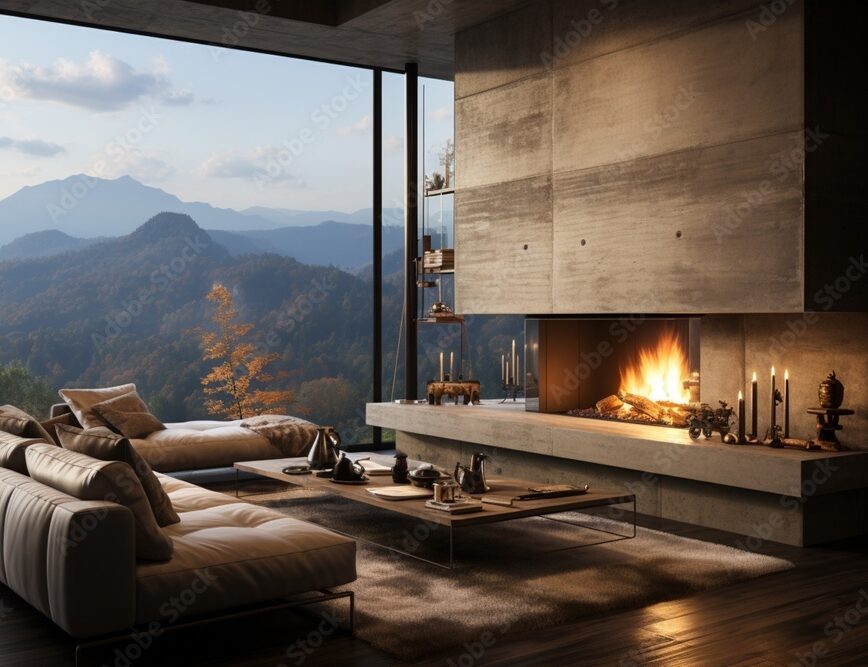
Healthcare and Corporate Leadership
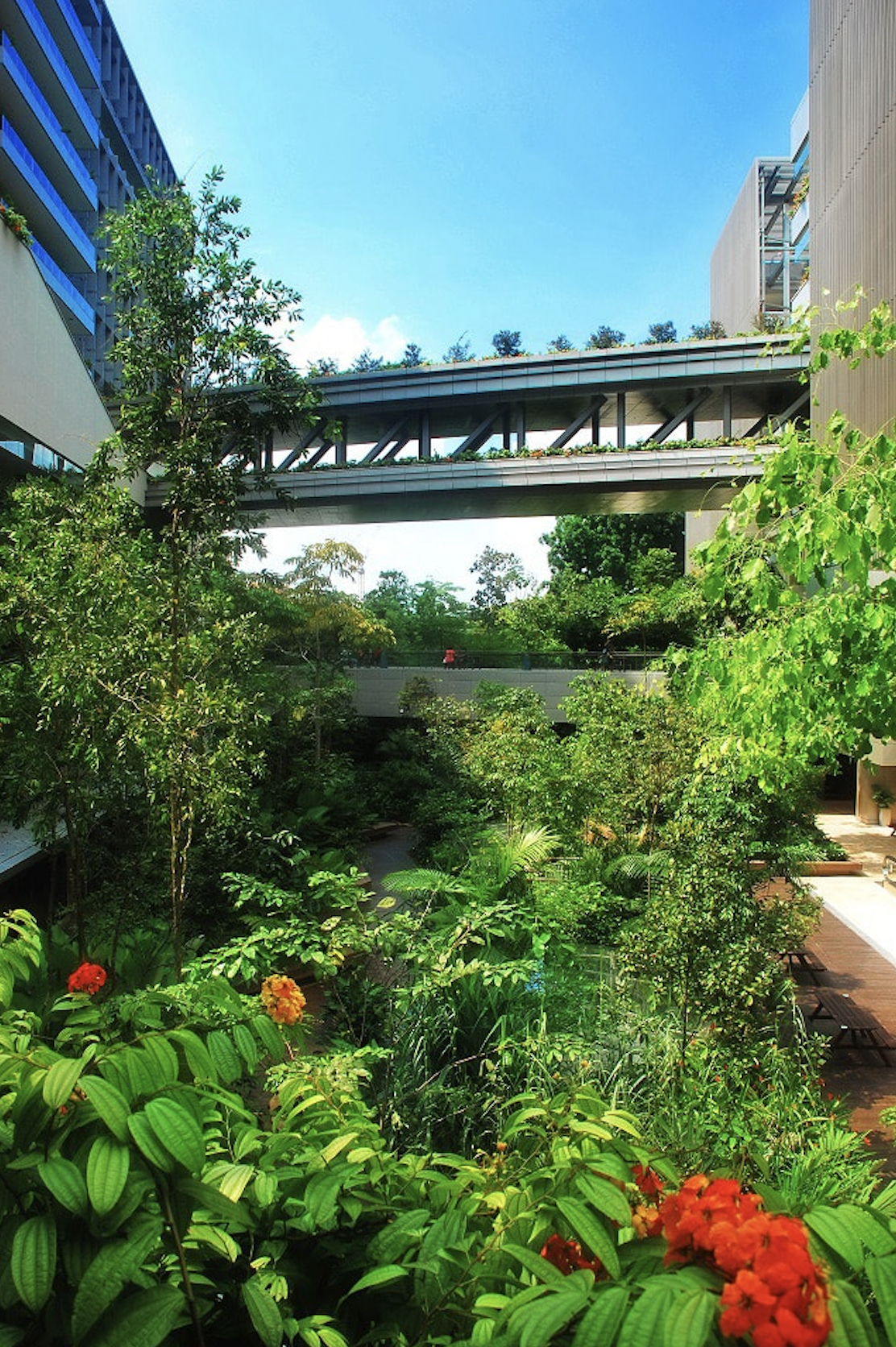
Khoo Teck Puat Hospital in Singapore is the global standard in biophilic design.
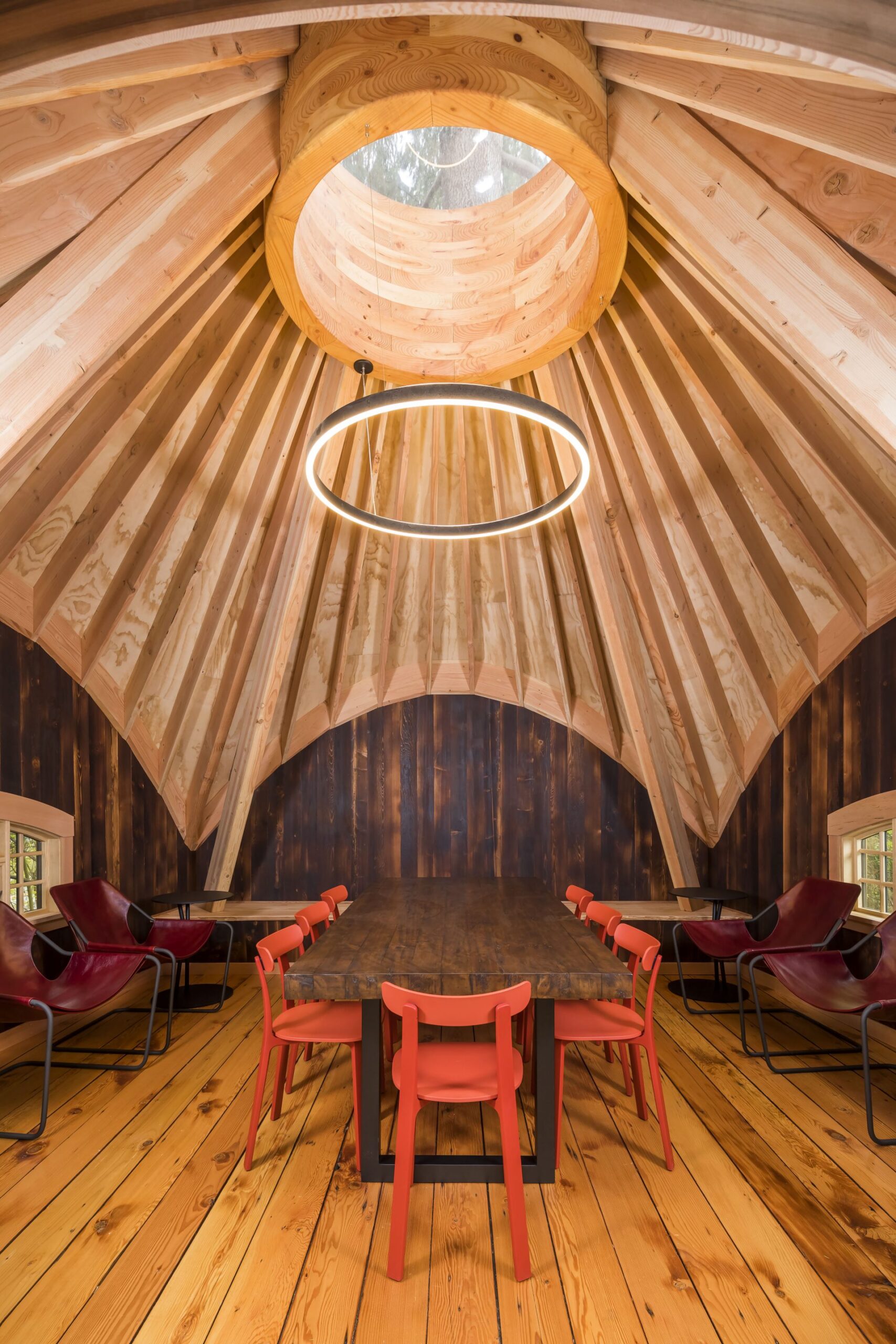
Microsoft builds conference rooms in treetops.
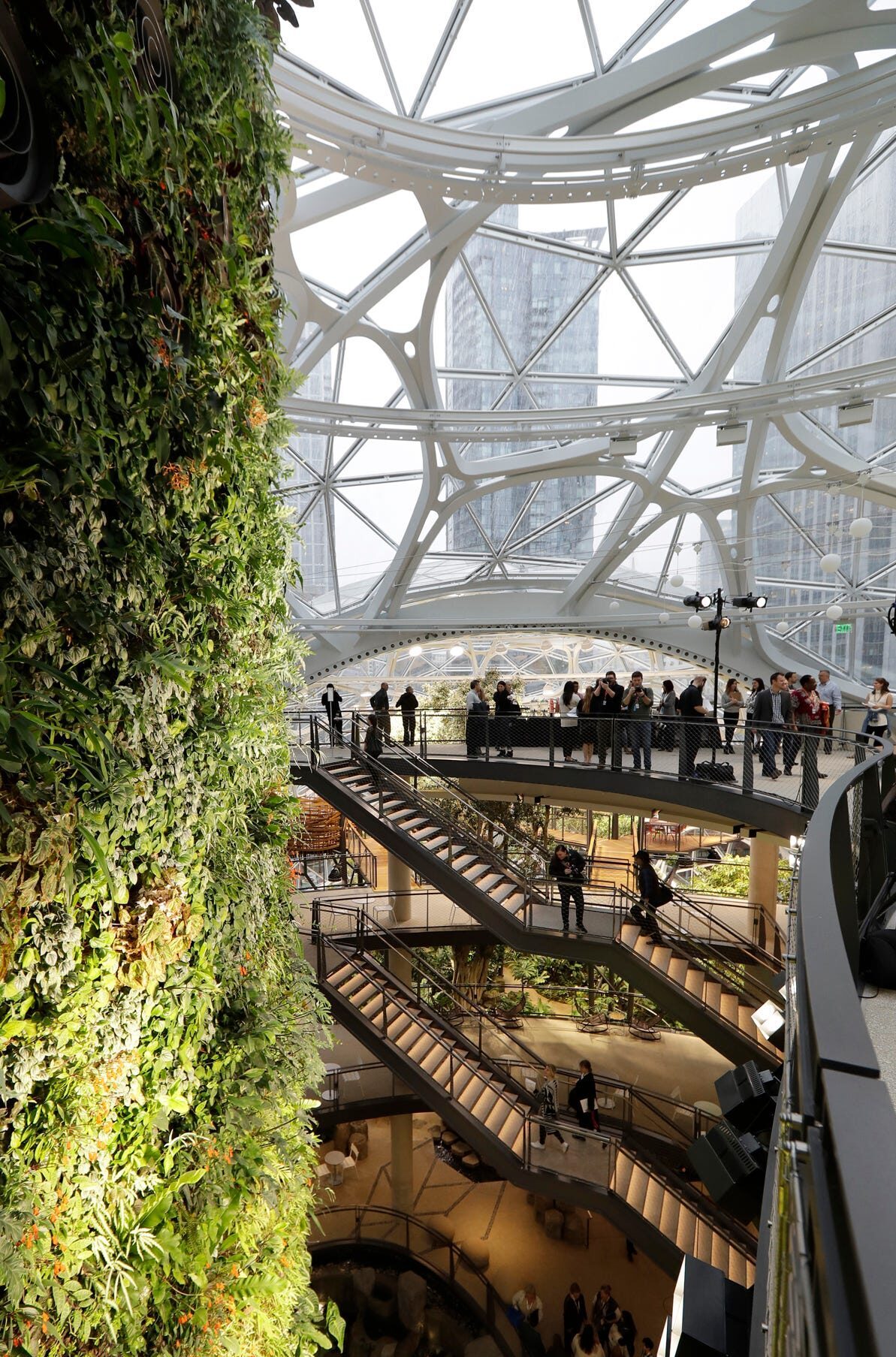
Amazon’s headquarters features 390 plant species and nest-like conference rooms.
These are strategic investments: environments with natural patterns measurably improve cognitive function, reduce stress, and enhance creativity.
If medical and corporate leaders use these principles, shouldn’t all designers?
Validation and Transformation
Designers have always known their work makes people feel better. You’ve heard it from clients: “I love this room. I feel so good here.” Science now documents why. We have research demonstrating that beauty- and nature-inspired design improve health as reliably as medical interventions.
This knowledge validates your intuition and allows you to transform the way you approach projects, communicate with clients, and position your value. You’re not just creating beautiful spaces, you’re creating alternative health resources. You’re improving cardiovascular health, supporting brain function, reducing stress, and enhancing cognition. That’s a serious value proposition!
The question isn’t whether these principles work; the evidence is overwhelming. The question is: How quickly will you adopt them to distinguish your practice? Early adopters are repositioning their brands and leading the transformation of our industry today.
The unconscious mind is always responding, always registering whether an environment supports well-being. Now you have the knowledge to design for the brain you can’t see, and create spaces that measurably improve lives.
Ready to Lead the Movement?

The Science in Design® Certification Program provides the complete framework to implement these neuroscience-backed spatial design principles. Learn from professors at Harvard, Johns Hopkins, and University of Pennsylvania.