
The Complete Guide to Neuroaesthetics for Interior Designers: How Science Validates Design
For years, you’ve heard clients say it: “I love this room. I feel so good here.” You’ve always known your work makes people feel better. Now, science proves it.
Neuroaesthetics is the study of how beauty affects the brain, revealing that design decisions trigger measurable biological responses. Heart rates slow. Blood pressure drops. Serotonin increases. Stress hormones decrease. When you create a beautiful space, you’re not just satisfying aesthetic preferences; You’re creating documented health outcomes.
This isn’t abstract theory. It’s documented neuroscience from the world’s leading research institutions that transforms how you communicate value, differentiate your practice, and approach every project. The convergence of neuroscience and design represents the most significant evolution in our industry in decades, and it’s happening right now.
Welcome to the future of interior design, where beauty and wellness are inseparable, and your intuition is validated by research from Harvard, Johns Hopkins, Penn Center for Neuroaesthetics, and leading universities worldwide.
1. What is Neuroaesthetics?

Neuroaesthetics is the convergence of neuroscience and aesthetics: the scientific study of how beauty, nature, and fine design affect our brains and bodies. It’s where art meets biology, where your creative decisions meet measurable health outcomes.
In the 1990s, brain scanning technology advanced enough to measure our responses to beauty in real-time, which is when neuroaesthetics began documenting what happens physiologically when we encounter something beautiful. Researchers can now observe brain activity, track hormone releases, measure cardiovascular changes, and document stress reduction, and what happens to these health markers when triggered by thoughtful design.
For decades, designers relied on intuition, training, and aesthetic judgment. Now, we have the scientific evidence explaining exactly why certain design choices create the responses they do. This knowledge doesn’t replace creativity; it amplifies it with evidence that transforms client relationships and business outcomes.
Why Interior Designers Need to Know This NOW
Khoo Teck Puat Hospital – Singapore
The design industry is evolving rapidly, and neuroaesthetics sits at the center of this transformation. Clients increasingly expect wellness-focused environments. Healthcare facilities worldwide invest millions in neuroaesthetic design because the evidence is overwhelming. Competitors who understand and communicate the science behind their work command premium fees and deeper client trust.
This knowledge transforms everything about how you practice:
Your client conversations shift from “I think this will look nice” to “I can create spaces that are scientifically proven to improve your health and wellbeing.” Instead of defending aesthetic choices, you can present research-backed strategies that clients immediately understand and value.
Download our Client Conversation Guide to learn more about how to speak to clients about neuroaesthetics and design.
Your competitive positioning strengthens. While others offer decorating services, you provide health-promoting, science-backed design solutions. This is a fundamental repositioning that separates you from everyone else in your market.
Your professional value increases. When clients understand you’re creating environments that measurably improve their wellbeing, pricing conversations change entirely. You’re offering something genuinely unique and valuable.
Learn more from interior design marketing pros Ericka Saurit and Katie Decker-Erickson about marketing the benefits of neuroaesthetics in your design practice here.
Your confidence grows. When you understand the neuroscience behind your design decisions, you approach every project with greater certainty. You know why specific choices work, and you can articulate that knowledge clearly.
Lakshmi “Lucky” Lumpkin of Laksmi Interiors is one of the 200+ designers already integrating the tenets of neuroaesthetics into their design practice. Hear what she has to say about the effect it’s had on her business:
Want to join Lucky and the other Science in Design certified designers creating intentional health and wellbeing outcomes for their clients?
The Medical Community Stands With Us
While we’re not doctors, with the new advancements in scientific research, home design is being viewed as an alternative health resource. In fact, Dr. Claudia Miller, head of environmental medicine at the University of Texas, made a statement that should transform how every designer views their work:
“Architects and designers have a greater ability to improve public health than medical professionals.”
That’s right. Doctors—the people we trust with our health—say you have a greater ability to improve health than they do. This isn’t hyperbole or marketing language. It’s based on decades of research showing that environmental factors have profound, lasting impacts on health.
Your work directly impacts the physical and emotional health of everyone who inhabits the spaces you create.

Professional Validation
Perhaps the most powerful aspect of neuroaesthetics for designers is validation. You’ve always felt that your work matters beyond aesthetics. You’ve sensed that the right room improves quality of life. You’ve heard countless clients describe feeling happier, calmer, and more energized in spaces you’ve designed.
But for decades, that remained in the realm of subjective experience. It was hard to quantify, impossible to prove, and difficult to communicate to potential clients.
Now you know why. Now you have the research, the data, the scientific backing that transforms intuition into evidence.
Want to have the knowledge and power to have a great impact on your clients’ wellbeing and your business outcomes?
II. The Science & Academic Foundation
The Simple Truth
Neuroaesthetics reveals how beauty affects the brain through measurable, objective biological responses. With advanced scanning technology like fMRI and PET scans, researchers document exactly what happens when we encounter beauty:
- Cardiovascular system: Heart rate decreases, blood pressure lowers, and these changes are significant enough to impact long-term health outcomes
- Brain chemistry: Serotonin and dopamine release increases, creating the biological foundation for why people say “I feel so good in this room”
- Skin response: Galvanic Skin Response (GSR) documents structural cellular changes: your cells literally respond to good design and beauty
- Stress markers: Cortisol levels decrease substantially, affecting everything from immune function to cognitive performance
- Mental performance: Creativity, problem-solving, and concentration improve measurably in well-designed environments
These aren’t subtle effects. They’re significant, documented, reproducible responses that occur consistently across different populations and environments.
The Numbers That Matter

95% of brain activity is unconscious. Nobel laureate Eric Kandel’s research shows that nearly all brain processing occurs below conscious awareness. All of our conscious thoughts are unconscious first. When clients enter a space you’ve designed, their unconscious brain forms impressions in 3-4 seconds: before they’re aware of thinking anything. This is why designing for the subliminal brain is critical.
Learn more about the power of spatial design for the unconscious mind here.
Measurable health impacts are documented. Research consistently demonstrates:
- 15-20% reduction in stress hormones in thoughtfully designed spaces
- Decreased heart rate and blood pressure in nature-inspired environments
- Elevated serotonin levels in response to aesthetic beauty
- Improved cognitive performance in spaces with daylight and natural patterns
- Accelerated patient recovery in hospitals applying neuroaesthetic principles
These numbers represent real health outcomes—the kind of improvements that medical interventions aim for but often struggle to achieve consistently.
Designers outperform doctors in health promotion. Dr. Miller’s statement is based on evidence that shows environmental factors have profound, lasting impacts on health that rival or exceed many medical interventions.
Expert Authority
Our content and academic partners include researchers and scholars from the University of Pennsylvania, University of Oregon, University of Texas, Harvard University, Boston Architectural College, and Johns Hopkins Arts and Mind Lab, some of whom are outlined below.
For a full list of our faculty members, visit the Science in Design faculty page.
With the Science in DesignⓇ certification program, you get to learn what these experts know and how to apply this cutting-edge science to the beauty you already know how to create. Be a part of the movement. Get certified now.

Dr. Anjan Chatterjee is a Professor of Neurology, Psychology, and Architecture at the University of Pennsylvania and founding director of the Penn Center for Neuroaesthetics. He is the author of The Aesthetic Brain: How We Evolved to Desire Beauty and Enjoy Art and co-editor of Neuroaesthetics in Focus, among other influential works exploring the neurological basis of aesthetic experience.

Ann Sussman is an architect, author, and researcher specializing in how buildings influence people emotionally, and serves as President of the Human Architecture & Planning Institute and instructor at Boston Architectural College. She is co-author of Cognitive Architecture: Designing for How We Respond to the Built Environment (2015, 2nd ed. 2021), which won the 2016 Place Research Award from the Environmental Design Research Association. Her work uses eye-tracking technology and neuroscience to understand human perception of the built environment.

Don Ruggles is an AIA architect, author, and CEO Emeritus of Ruggles Mabe Studio Architecture + Interiors, who has dedicated over a decade to researching beauty as a vital component of architecture and human health. He is the author of Beauty, Neuroscience & Architecture: Timeless Patterns & Their Impact on Our Well-Being, which explores how architectural forms and patterns promote homeostasis between the sympathetic and parasympathetic nervous systems. Don’s work demonstrates that thoughtfully designed environments can foster health and wellbeing through brainwave coherence, similar to the proven effects of meditation.

Bill Browning is a founding partner at Terrapin Bright Green and a pioneering voice in biophilic design since the 1990s. A founding board member of the US Green Building Council, he has advised major organizations including Google, JPMorgan Chase, and the US EPA on integrating nature into the built environment. Bill is a co-author of the influential “14 Patterns of Biophilic Design” and “The Economics of Biophilia,” which have shaped green building standards worldwide.

Richard Taylor is Professor of Physics, Psychology, and Art, and Head of the Physics Department at the University of Oregon, with advanced degrees in physics and art theory. He is a globally recognized expert in fractal patterns across nature, architecture, art, and human physiology, having published over 300 articles and been featured in documentaries on ABC, PBS, and the BBC. His groundbreaking research on fractal fluency demonstrates how nature’s patterns measurably reduce stress and enhance well-being, and he has presented his work at prestigious venues including the Nobel Foundation, the Guggenheim Museum, and the Pompidou Centre.

Alexandros Lavdas is a neuroscientist, Senior Researcher at Eurac Research in Bolzano, Italy, and Assistant Professor and Head of Psychology at Webster University Athens. With a PhD from University College London, he specializes in examining visual organized complexity—such as patterns found in nature and pre-modern architecture—and exploring their physiological and neural effects on human well-being.
With the Science in DesignⓇ certification program, you get to learn what these experts know and how to apply this cutting-edge science to the beauty you already know how to create. Be a part of the movement.
With the Science in Design®certification program, you get to learn what these experts know and how to apply this cutting-edge science to the beauty you already know how to create. Be a part of the movement.
III. The 5 Core Neuroaesthetic Principles

Principle 1: Color and Emotional Response
Color isn’t merely aesthetic. Specific wavelengths trigger distinct neurological responses. When light enters the eye, it stimulates not only vision but also direct neural pathways to brain regions managing mood, energy, and stress responses.
The neuroscience: Cooler hues like blues and greens activate parasympathetic responses, slowing your heart rate and promoting relaxation. Warmer hues like reds, oranges, and yellows stimulate sympathetic responses, increasing alertness and vitality. Saturation and brightness levels further influence these effects.
Understanding these mechanisms allows you to design spaces that actively support desired emotional and physical states.
Lori Weitzner, renowned color expert and product designer, has developed Ten Color Worlds, which explore how color impacts well-being by engaging multiple sensory pathways simultaneously in the brain.
Learn more in our Color Psychology in Interior Design deep dive.
Principle 2:
Light and Brain Health
Light stands among the most powerful design elements for health. It synchronizes circadian rhythms, influences neurotransmitters that regulate mood, supports vitamin D synthesis, and directly impacts cognitive function.
The neuroscience: Light exposure—particularly daylight—synchronizes our internal biological clock. Blue-spectrum morning light suppresses melatonin and increases cortisol, promoting alertness and energy. Dimmer, warmer evening light allows melatonin production, supporting sleep quality. Disrupting this pattern through poor lighting design creates measurable health consequences including sleep disorders, mood dysregulation, and reduced cognitive performance.
Learn more in our Lighting Design for Health & Wellness deep dive

Principle 3: Spatial Configuration and Cognition
The unconscious brain responds sensitively to spatial proportion, volume, and configuration. These elements don’t merely affect how spaces appear, they influence how our brains operate within them.
The neuroscience: Joan Meyers-Levy’s ceiling height research demonstrates that higher ceilings promote abstract, creative thinking known as freedom-oriented processing, while lower ceilings enhance concrete, detail-focused thinking known as confinement-oriented processing. Circulation patterns affect stress through predictability and ease of wayfinding. Room proportions trigger responses rooted in evolutionary preferences for certain spatial relationships. The science is in our DNA, and with appropriate knowledge, we can infuse it into designs to ensure our clients feel good in the spaces we create.
Learn more in our Spatial Design & Neuroscience deep dive

Principle 4:
Texture and Sensory Experience
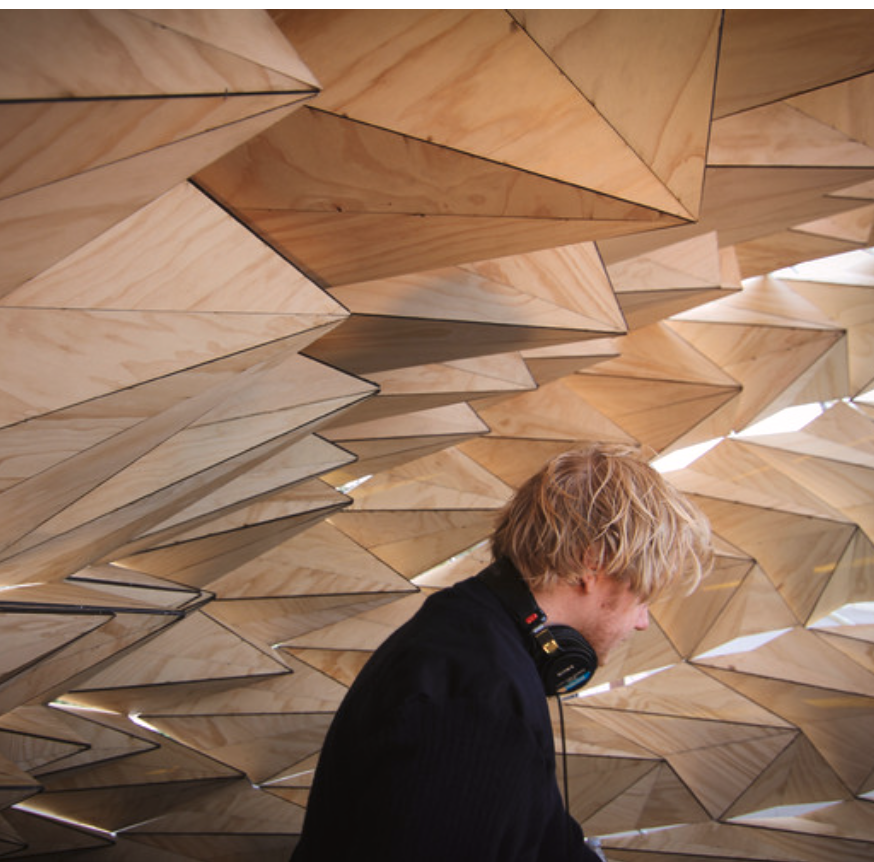
Tactile experience activates the somatosensory cortex and triggers emotional processing centers. Natural materials like wood, stone and natural fibers are consistently shown to generate positive responses. Smooth, cold, synthetic surfaces correlate with elevated stress markers.
The neuroscience: Our sense of touch is deeply connected to emotional processing. When we touch natural materials, our brains recognize patterns and textures that we evolved with for millions of years. Synthetic materials lack this evolutionary resonance, creating subtle stress responses we may not consciously register but that affect us nonetheless.
Principle 5: Acoustic Environment
Unpredictable noise elevates cortisol and maintains heightened stress states. Pleasant ambient sounds reduce stress markers and improve concentration.
Some common design strategies used to create a positive acoustic environment include soft furnishings that absorb sound, intentional furniture placement, acoustic panels, white noise systems or water features, and separating noisy activities from quiet zones.
Download our Neuroaesthetic Design Client Conversation Guide to keep these principles in mind when designing for your clients’ health and well-being.
IV. Designing for the Unconscious Mind

The Subliminal Brain & Fractal Fluency
Your clients’ brains are already fluent in a visual language they’ve never consciously learned: the language of fractals. It’s a language our bodies have developed an understanding of over millions of years.

Visual Demonstration: The Language Your Brain Already Speaks
Look at this tree. Notice how the same branching pattern repeats at different scales. Your visual system recognized this instantly as “natural” and “correct.” You didn’t have to think about it.
This is fractal fluency: your brain’s innate ability to read nature’s visual language. When clients enter spaces with fractal patterns, their unconscious brain immediately registers: This feels right.
The Subliminal Brain & Fractal Fluency
Professor Richard Taylor’s research reveals that our visual systems evolved in fractal-rich natural environments. Artificial spaces without these patterns create stress, visual fatigue, and cognitive strain. It’s like living somewhere where you don’t speak the language.
V. Real-World Applications

Healthcare Environments
Khoo Teck Puat Hospital in Singapore represents the gold standard in neuroaesthetic design. Patient recovery times shortened, pain medication requirements reduced, and patient satisfaction scores increased significantly.
Cancer treatment facilities, like Maggie’s Centres, also integrate neuroaesthetic design strategies that demonstrate similar results. Patient stress levels measurably drop in these environments compared to traditional facilities.
If hospitals worldwide use neuroaesthetics to heal patients, shouldn’t residential and commercial designers apply these same principles?
Science is on our side. Get certified now.
VI. Transform Your Interior Design Practice
Old Way vs The New Way
Designers are moving beyond “I think this will look nice” and “Trust me, I’m a designer” to far more compelling evidence. Instead, imagine discussing design plans with your clients in ways that share scientific facts. Think of the way your value will change, in actuality and perception, when you can share information such as “research shows this reduces stress by 15%.”
That’s the shift Science in Design® makes possible. Our certification transforms intuition into evidence, and proof into trust.
What Changes for You
Pricing power increases dramatically. Science-backed design commands premium fees. When clients understand you’re not simply decorating but improving their health based on scientific research, price objections decrease.
Client trust deepens immediately. You’re not asking them to trust your taste, you’re presenting research from reputable institutions like Harvard and Johns Hopkins.
Referrals multiply organically. Clients say, “My interior designer used science-backed strategies to create a space that measurably reduced my stress.”
Professional pride and validation. Your intuition is validated. You always knew your work mattered. Now you have the science proving it.
Marketing differentiation becomes effortless. Your website, social media, and marketing materials communicate value that goes far beyond aesthetics.
Designer Testimonials
“The Science in Design Certification was immensely impactful for my interior design career, providing a robust framework to integrate proven scientific principles into my wellness design practice.” — Patricia Kennedy, Rendezvous Design
“The Science in Design Neuroaesthetic Certification course deepened my commitment to creating homes that truly support my clients’ lives, health, and overall wellbeing. It highlighted how, for many clients in the UK, wellbeing-led design is often seen as separate from more colourful, expressive interiors. This insight has reinforced the opportunity to thoughtfully bridge the gap between spaces that feel vibrant and personal, and those that genuinely enhance wellbeing.” — Roberta Baldan, London, England
VII. Resources & Next Steps
Free Resources
Download our Client Conversation Guide Learn how to easily communicate the principles of neuroaesthetics to your clients and how your design benefits their health and wellbeing.
Check Out Our Certification Program Introduction Mike Peterson provides a comprehensive overview of how neuroaesthetics is transforming the industry. Link?
Watch Our Free Webinars Learn from scientific experts and experts in the field of interior design in our free webinar series, covering everything from marketing your science-backed design services to fractal fluency.
Explore Our Comprehensive Guides:
- Color Psychology in Neuroaesthetic Design →
- Lighting Design for Brain Health and Wellness →
- Spatial Design & Neuroscience →
Join the Science in Design LinkedIn Community Connect with 200+ certified designers and stay current on the latest research.
Science in Design® Certification Program

What you’ll gain: A comprehensive understanding of neuroaesthetic and biophilic design principles, plus how to market your science-backed practice.
Program Details:
- 22 self-paced classes
- 13 IDCEC-approved credits
- Up to one year to complete
- Faculty from UPenn, Johns Hopkins, University of Oregon, Boston Architectural College, University of Texas, and more.
Explore the Full Certification Program →
VIII. Frequently Asked Questions
Is neuroaesthetics just for luxury design? No. Neuroaesthetic principles apply regardless of budget. The science works at every price point.
Do I need a science background? Absolutely not. The certification program translates complex neuroscience into designer-friendly principles and practical applications.
Will clients actually care about the science? Overwhelmingly, yes. Clients increasingly expect wellness-focused solutions. Science becomes a powerful tool for building trust and communicating value.
How is this different from evidence-based design? Neuroaesthetics applies neuroscience to understand why certain designs affect us, including the biological mechanisms behind these effects. This allows designers to apply principles across all project types with confidence.
Can I start before getting certified? Yes! Start with our free resources. You can watch our free webinars or download our client conversation guide to get started now. Certification provides comprehensive knowledge, academic backing, and the credentials to establish authority.
What’s the ROI on certification? Certified designers report premium fee increases, new client acquisition, stronger referrals, media opportunities, and speaking engagements. Many recoup certification investment with their first post-certification project.